The BMW 1 Series is such a regular sight on our roads these days it’s hard to believe that, not too long ago, it didn’t even exist. BMW knew many years ago that it had to crack the family hatchback market, and needed to attract younger buyers by providing them with a cheaper, more youthful entry-level model.
The company’s first attempt, in 1993, was the BMW 3 Series Compact. The theory was simple: take a 3 Series, chop out a chunk of its length, and add a hatchback tail end. In practice, however, this entry-level BMW just wasn’t very good. For starters, there was no five-door option, which hampered practicality, and the interior – which was actually taken from the previous-generation 3 Series saloon – felt cheap and old-fashioned. This was a cut-price BMW, but it felt it.
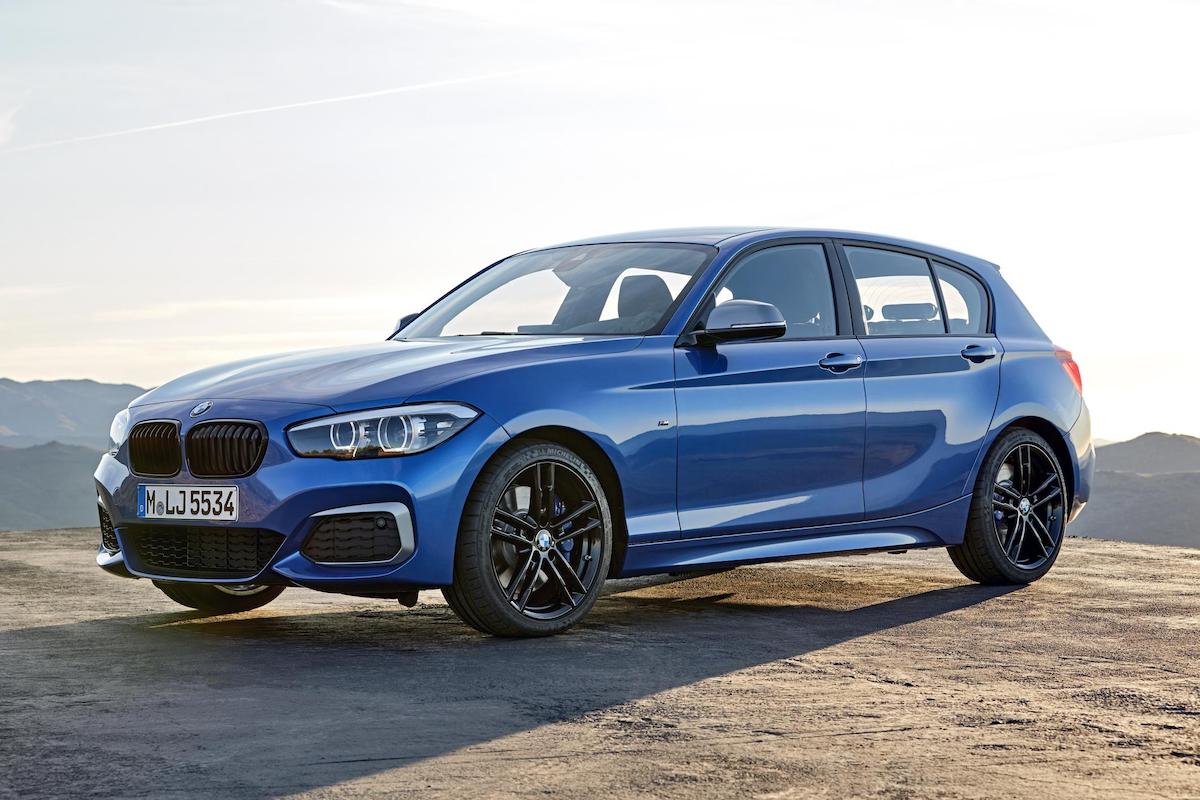
An entirely new 3 Series Compact in 2000 solved this latter problem with a new, and much higher-quality, interior. But it was strictly a three-door, and by comparison with the clever Mercedes-Benz A-Class and smart Audi A3, both of which were by then available with five doors, the 3 Series Compact just looked like too much of a compromise.
It was ditched in 2004 in favour of the sort of car BMW arguably should have fielded in the first place: a distinct model range with both three-door and five-door options, featuring BMW’s traditional rear-wheel-drive layout and a range of four-cylinder and six-cylinder diesel and petrol engines. The 1 Series was born.
generace: 3
BMW 1 Series mk3 (2019-present)
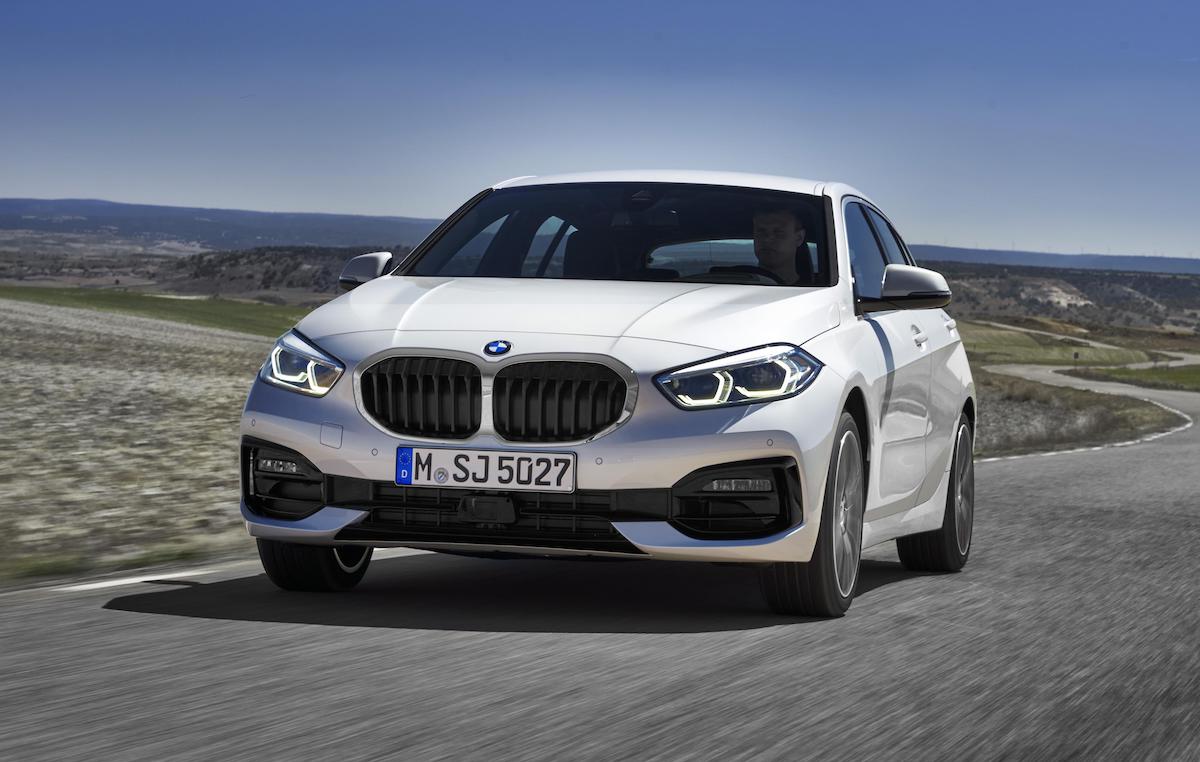
Bodystyles:
- Pětidveřový hatchback
Notable features and facelifts of the BMW 1 Series mk3:
- New model ditched rear-wheel drive in favour of front-wheel drive
- Mix of petrol and diesel engines available
- Five-star score in Euro NCAP safety tests
The third-generation 1 Series presented a big change from the models that went before it. BMW opted to switch from rear-wheel drive to front-wheel drive for the new BMW 1 Series, and as a result, the new car looked different – shorter in length, yet taller, and much more like a conventional family hatchback.
The new look might have made the 1 Series look more generic, but it also made it more practical; rear-seat space is now on a par with rivals’, as is boot space. The interior is high in quality, with all the latest technology you’d expect from a new BMW available, including gesture control, Apple CarPlay and Android Auto, and satnav, as well as various advanced connectivity features.
But what about the driving experience? Well, while the latest car is different to drive, it’s still very entertaining, and it still gets a smooth and punchy range of engines, too. Customers can choose from a six-speed manual gearbox or two different automatics, depending on model. The range is wide enough that you can choose to prioritise high MPG and affordable running costs, or there are performance options, such as the all-wheel-drive BMW M135i xDrive.
So what’s next for the latest BMW 1 Series? We can expect the range to grow, with electrification doubtless on its way; don’t be surprised to see a battery-electric 1 Series arrive in the next couple of years. In the meantime, the 1 Series remains a tempting family car option that’s still very rewarding from behind the steering wheel.
BMW 1 Series mk2 (2011-2019)
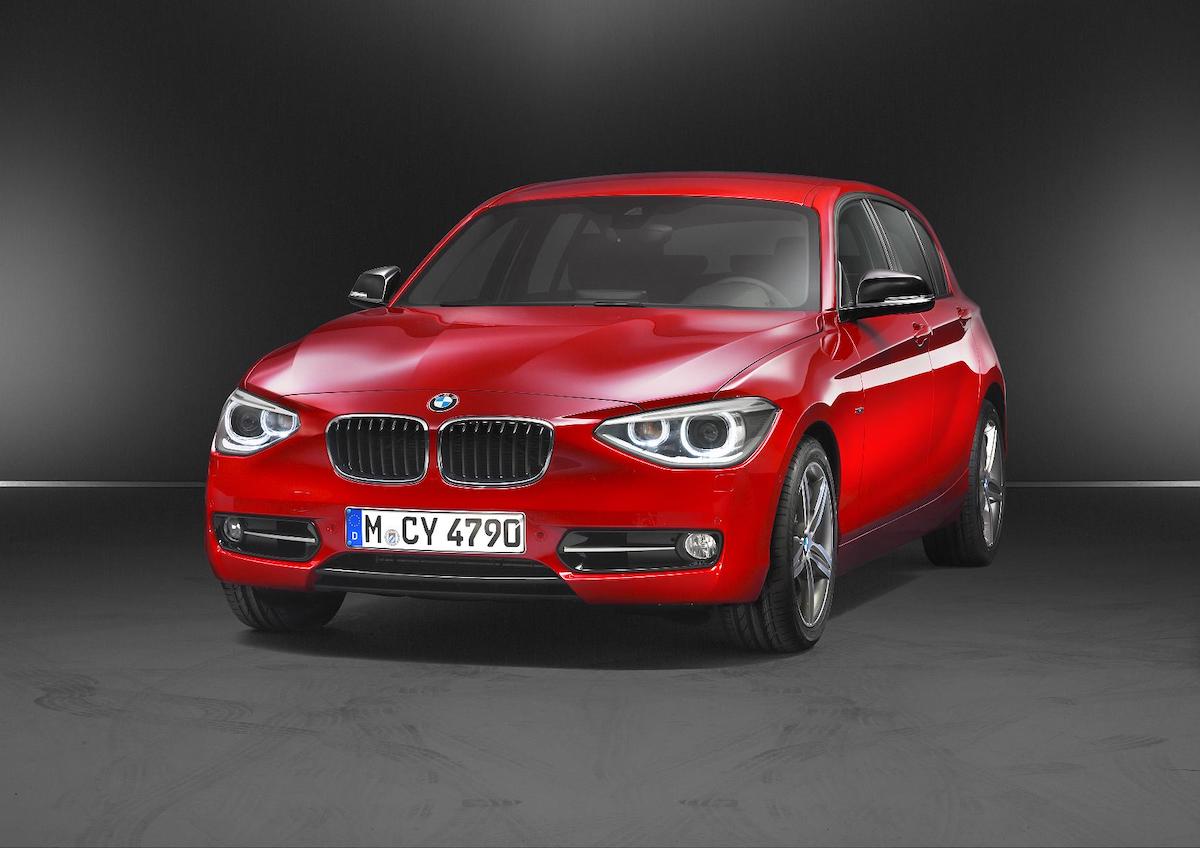
Bodystyles:
- Pětidveřový hatchback
- Třídveřový hatchback
Notable features and facelifts of the BMW 1 Series mk2:
- Revised model was more spacious and more comfortable
- Coupe and convertible versions were renamed 2 Series
- All turbocharged engines, and the option of all-wheel drive
- Facelifted in 2015 and interior revised with new design and iDrive infotainment system in 2017
BMW took on board the criticisms its buyers had of the first-generation car, notably the firm ride. The new model was smoother and more comfortable, with a suspension that more convincingly blended a softer ride quality with a driving experience that was just as sporty as before.
Inside, the second-generation 1 Series was more spacious. While it still didn’t quite offer the same sort of space as its best rivals, no longer did it feel like as much of a compromise to choose a 1 Series for its sporty feel. Smarter materials meant the dashboard felt higher in quality, too, and there was a choice of trim levels to choose from.
Under the bonnet, this new 1 Series featured a new range of turbocharged engines, meaning that they packed a useful punch, but also impressive fuel economy and very respectable carbon emissions figures. For the first time, you could even specify four-wheel drive (known as xDrive), while a fast M135i version – later M140i – was the first rear-wheel-drive hot hatch on the market for decades, and much-loved as such.
In fact, the only area in which the 1 Series didn’t move forward with this second generation car was, arguably, the styling. Not everyone was a fan of the new nose and grille, but even this was rectified with a more palatable facelift in 2015.
BMW 1 Series mk1 (2004-2013)
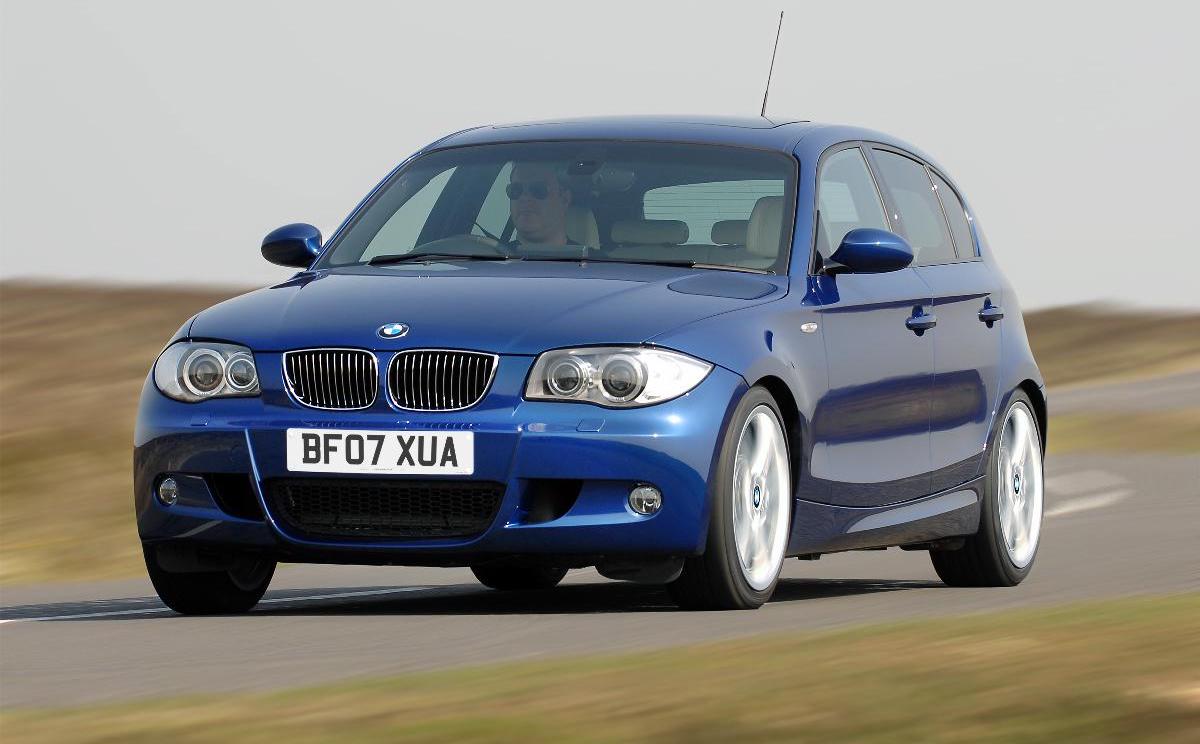
Bodystyles:
- Pětidveřový hatchback
- Třídveřový hatchback
- Two-door coupe
- Dvoudveřový kabriolet
Notable features and facelifts of the BMW 1 Series mk1:
- All models were rear-wheel drive, which was unusual for this type of car
- Four different bodystyles launched during the life of the mk1
- Performance 1 Series M Coupe was a sporty highlight
- Facelifts for the five-door hatchback in 2007 and the coupe and convertible 2011
With its long nose and low roof, the first-generation 1 Series hatchback didn’t look like most of its rivals. That’s because it was the only rear-wheel-drive car of its type on sale, and that also gave it certain disadvantages when compared with front-wheel-drive competitors like the Volkswagen Golf and Audi A3.
For example, the need for mechanical components to run beneath the floor and into the rear wheel arches meant the rear seats had to be mounted higher up, closer to the roof, and consequently they were less spacious. So it went for the boot, too, and as a result this first-generation 1 Series wasn’t quite as practical as its rivals.
Neither was it as comfortable, with a slightly over-firm ride – especially if you chose an M Sport model. However, the payoff was beautifully balanced, and incredibly sporty handling; the 1 Series was far better to drive than a family hatchback had any right to be. And of course it gave you that BMW badge on the nose, which made it an instant hit.
While it was launched in five-door form, a three-door joined the range in 2007, along with two-door coupe and convertible versions, which broadened the appeal of the 1 Series further still. These latter two body styles continued until 2013, when they were replaced by the BMW 2 Series.
Související témata
- BMW 1 Series Expert Review
- Odborná recenze Audi A3
- Expertní recenze Volkswagen Golf
od Alexe Robbinse
Alex býval editorem ojetých vozů pro What Car? a Autocar a také editor spotřebitelského motorismu Daily Telegraph. Zabývá se všemi druhy novinek a silničních testů, ale specializuje se na psaní ojetých vozů a moderní klasiky. Vlastní více než 40 vozů a obvykle ho lze najít při procházení inzerátů CarGurus a plánování jeho dalšího nákupu.
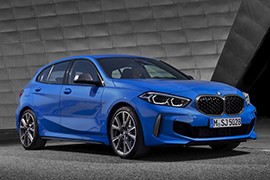
The third generation of the BMW 1-Series was a revolution for the small German car since it was based on a front-wheel-drive platform. But it didn’t mean it was less performant.
The success story of the 1-Series began in 2004. The sporty, nimble, small car gathered attention from everybody. The second generation was launched in 2011 and it continued the big sales numbers that reached 1.8-million units by the time the third generation appeared.
From first sight, it is impossible not to notice the huge kidney-grille. The angled headlights are going upwards along with the front fenders into a more accentuated slope toward the A-pillars. Since the front-wheel-drive platform was with transverse engines, the whole front of the vehicle was shorter than the one on the previous generation. The shorter front of the car allowed a bigger greenhouse with a long roofline that dropped away toward the rear. A wide tail with big shoulders over the rear wheel arches emphasized the car’s sporty look.
Inside the cabin, there was more room than in the previous generation, since the engine and transmission were in front of the windshield. Since there was more room for the front seats, those were installed forward and in effect, the rear legroom was bigger. The driver had a TFT display instead of the usual dials in the instrument cluster. A new infotainment unit that features gesture controls were installed.
Under the hood, there was a wide variety of engines, both diesel, and gasoline with manual or automatic transmission. For specific engine versions, an all-wheel-drive system was available.
dieselové motory:
benzínové motory:
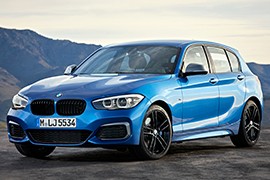
BMW 1 Series (F20) LCI 2017 — 2019
BMW did the last upgrade for the second generation of the 1 Series (F20) in 2017, before changing the generation in 2019.
It is usual for a carmaker to improve a vehicle around the middle of that model’s lifespan, and BMW named that upgrade as LCI (Life Cycle Impulse). It’s like a small bump to increase the sales and dust-off some systems which are no longer trendy among its customers. The 1 Series was the only rear-wheel-drive premium compact hatchback on the market, and the German carmaker bragged about that until it followed the trend and switched to a front-wheel-drive system in 2019.
There were minor changes to the car’s exterior. It brought the new Edition Sport Line Shadow, Edition M Sport Shadow, and BMW M140i Edition Shadow special editions. These underlined the car’s sporty look introducing a black kidney grille, black inserts in the LED headlights and darkened LED taillights.
Inside, BMW finally introduced the touch-screen infotainment system. While the German carmaker was the first to introduce a combined interface that gathered the audio, phone, and navigation into one unit and named-it iDrive on the BMW 7 Series, it waited a while to offer it with a touch-screen system. The sporty interior look was still the same, with very limited room in the rear due to the high center tunnel needed for the transmission.
BMW kept the three-cylinder engines for the base versions on the engine department, but the customers had a vast choice of engines to chose from. Like its predecessor, the 1-Series featured a rear- or all-wheel-drive system.
dieselové motory:
benzínové motory:
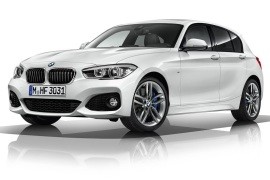
BMW 1 Series LCI (F20) 2015 — 2017
The second generation of the 1 Series from BMW has received an important facelift in 2015. The BMW installed features like automatic climate control, rain sensor, BMW Radio Professional and the iDrive standard on all the range. The 6.5 inches color display is also standard and integrated into the dashboard. It doesn’t look like it was installed by the dealers afterward.
The long hood, big wheelbase, and short overhangs add a sporty look to the vehicle. And, in the proper versions and with the proper outside option pack, it is not just a look. It is a warning. The kidney-grille got bigger, and as an option, the reshaped headlights can be equipped with full LED lights. The front bumper inspires an aggressive look.
Under the hood, there is a big range of powertrains, with manual or automatic transmissions. For the first time, the 1 Series can be equipped with the 8-speed Steptronic gearbox from the Japanese manufacturer Aisin.
Five petrol and five diesel engines with BMW TwinPower Turbo technology are available for the 2015 BMW 1-Series. Setting the pace in terms of sports performance is the BMW M135i M with an inline-6 engine now producing 326 hp. The most fuel-efficient is the BMW 116d EfficientDynamics Edition, which combines 116 hp with low fuel consumption of 3.4 liters per 100 kilometers (69.1 mpg-US). Customers can also choose the all-wheel-drive system, BMW xDrive, for the BMW M135i, BMW 120d, and BMW 118d.
dieselové motory:
benzínové motory:
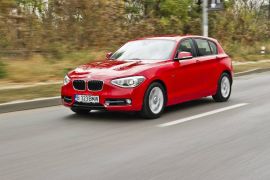
BMW 1 Series (F20) 2011 — 2015
BMW introduced the second generation of the 1 Series in 2011, continuing to threaten other premium car manufacturers that dared to compete in this segment. But unlike any of them, the Bimmer was the only one in its class with a rear-wheel-drive platform, which was a plus and a minus at the same time.
When Audi introduced the A3 on the market in the ’90s, it was almost alone in the segment. Mercedes-Benz had the A-Class, but that was a small-sized MPV, not a hatchback. Then BMW joined the bandwagon with the first generation of the 1 Series in 2004 and changed the rules of the game by introducing the RWD-based small-sized premium vehicle. And, when that wasn’t enough, it brought the all-wheel-drive versions into discussion when it launched the second generation of the 1 Series, also known as the F20.
Placing such a big front fascia on a small vehicle was considered not exactly elegant, but BMW knew its customers, and it knew that they wanted to have the kidney-grille large enough to be seen by other drivers in their rearview mirrors. Moreover, the headlights’ design followed the same design language as the rest of BMW’s range, with narrow inner sides and the famous “angel-eye” daytime running lights inside the headlamps. On the bumper, depending on the version, the German automaker installed a set of air intakes on the sides where the fog lamps were fitted. From its sides, the cab-rearward design was obvious thanks mostly to the long and low hood, made to accommodate inline-six engines underneath it. The sculptured door panels featured an ascending line that started from the front wheels and emerged onto the C-pillars. Finally, at the back, the automaker created a tilted forward tailgate adorned with a small roof spoiler on top. Depending on the engine version, underneath the rear bumper, BMW installed a twin or a single exhaust pipe.
Inside, the best seats in the house were at the front. Even the base models featured bolstered seats, and the automaker offered the F20 with a set of high-bolstered ones in the M-Package, which featured adjustable lengths and high-bolstered areas. In front of the driver, the dashboard design was simple and clear, with two dials for the tachometer and speedometer and two smaller ones for the fuel level and engine temperature. On the center stack, again, depending on the options, BMW placed the screen for the infotainment unit that could’ve been controlled via the rotary knob housed by the center console. In the back, there was hardly enough legroom for three rear passengers, especially since the transmission tunnel crossed the car from front to back.
Under the hood, BMW installed a wide engine range, either gasoline or turbodiesel. These were paired with six-speed manuals or, as an option, with an eight-speed automatic. Depending on the engine version, the car promised excellent fuel efficiency and plenty of fun behind the wheel.


