Bringing Audi, Lamborghini, Ducati and Bentley together in the Premium brand group will make these companies even stronger. The reasons.
03/17/2022 Čas na čtení: 7 min

New management model
The Passenger Cars business area within the Volkswagen Group is made up of the three brand groups Premium, Sport and Volume. The new Volkswagen Group management model reinforces these existing brand groups and emphasizes their role as independent operating units. Audi, which heads the Premium brand group within the Volkswagen Group, took over management responsibility for Bentley on March 1, 2021. As a result, the brand group now incorporates the Audi, Lamborghini, Ducati and Bentley brands.
The Bentley brand was consolidated effective January 1, 2022. In the future, Audi will focus even more strongly on synergy-based brand group management with clear and consistent reporting. By actively communicating selected key performance indicators and strategic goals for each brand, it will be possible to provide greater transparency and make clear commitments, thus helping to meet the requirements of the capital markets even more effectively.
Individual brand DNA
As far as the management model itself is concerned, Audi relies on the principle of variable intensity across all divisions. The goal is to create maximum synergies between the brands without restricting their freedom or diluting their individual brand DNA.
Central management and cooperation on cross-brand topics such as procurement, development, administration and the establishment of new business models will produce uniform, coordinated process steps. At the same time, this gives the brands the opportunity to reinvest freed-up capacities in brand-specific activities.
The grouping of the brands offers great potential for technical synergies, particularly against the backdrop of the future platform strategy. Additional success factors for the Premium brand group lie in a harmonized corporate, brand and product strategy and in integrating the brands into the existing committee and decision-making structures.
Full financial figures for Bentley at the level of the other brands will be published for the first time in the Q1/2022 Quarterly Update. 1
Lamborghini in the fast lane
Lamborghini in the fast lane

In the 2021 fiscal year, Lamborghini continued the impressive successes of recent years, as evidenced by its key performance indicators.
Lamborghini finished the year 2021 with a remarkable record: 8,405 vehicles were delivered worldwide, an increase of 13 percent on the previous year and more than 2 percent compared with the pre-Covid year 2019. The most popular model with customers in 2021 was once again the Urus 2 with 5,021 vehicles delivered (+14 percent). Next in line is the Huracán (2,586 vehicles, +18 percent), which saw a sharp rise in sales thanks to the strong impetus provided by the Huracán STO. 3 A total of 798 of the Aventador were delivered to customers.
Lamborghini 4 achieved record revenue of EUR 1.95 billion in 2021. This represents an increase of 19 percent compared with 2020 and 4 percent compared with 2019.
Commitment plus transparency
The Premium brand group aims to increase the transparency of its financial reporting. For instance, Lamborghini published its operating return on sales (ROS) for the first time. In fiscal year 2021, this key performance indicator reached 20.2 (16.2) percent, which is more than twice as high as in 2018. Alongside the figure itself, the company presented its strategic return target: Lamborghini aims to achieve an ROS of over 25 percent from 2030. Until then, the company is targeting an operating return on sales of between 22 and 25 percent.
The Lamborghini strategy is founded on a strong brand that is authentic, unexpected and bold. In addition to series-production vehicles, the model portfolio features what the company calls “few-off models”: exclusive and highly customized small-series vehicles such as the Lamborghini Sián Roadster. 5 Add-on services such as the “ad-personam” program, offering customers maximum customization options, also play an important role.
A sustainability strategy with a heart
In 2021, Lamborghini presented a clear strategy for the future: “Direzione Cor Tauri,” named after the brightest star in the Taurus constellation. It is the roadmap to an electrified future that keeps the core values of supercars in focus. “Direzione Cor Tauri” encompasses the decarbonization of future models as well as the Sant’Agata Bolognese site, in line with Lamborghini’s comprehensive sustainability strategy. The ambitious transformation program envisages complete hybridization of the portfolio by the end of 2024. In total, the company plans to invest EUR 1.8 billion over the next five years, to be financed entirely from its own resources.
Sustainability also picked up speed at Lamborghini in 2021. Among the key projects was the launch of an initiative for more environmentally compatible logistics, which involved shifting the transportation of Urus bodies entirely to rail. This switch has helped reduce the CO₂ emissions associated with Urus logistics by 85 percent compared with the previous year. Lamborghini has been working toward greater sustainability for several years now. Through a series of programs and investments, Lamborghini was able to certify its entire plant as net carbon-neutral 6 in 2015 7 .
Millions of fans and followers
Lamborghini is one of the most popular brands on almost all social networks. On Instagram, for example, the brand has more than 31 million followers. That success is backed up by top scores in surveys of customer perception and dealer satisfaction. In addition, the brand benefits from a very young customer base compared with its competitors.
Ducati sets new records
Ducati sets new records

2021 was a record year for Ducati. With 59,447 motorcycles, deliveries increased by around 24 percent compared with the previous year. This marks an all-time high. Operating profit reached EUR 61 million, with an operating return on sales (ROS) of 7.0 percent. Germany (6,107 deliveries, +11 percent year-on-year) remains the motorcycle manufacturer’s third most important market after the USA (9,007 deliveries, +32 percent year-on-year) and Italy (8,707 deliveries, +23 percent year-on-year).
In 2021, Ducati consequently grew at twice the rate of the overall market in the motorcycle segment above 500 cc. In the fourth quarter of 2021, the company presented nine new models. These are being introduced into the market in 2022.
In launching the DesertX, a completely new development, Ducati is tapping into the promising touring enduro market. The most powerful model in the entire crossover segment in 2022 will be the Pikes Peak version of the 2021 bestseller, the Multistrada V4 (9,957 deliveries). In terms of the planned expansion of its model range, especially in the high-margin segments, Ducati has set itself even more ambitious goals for the future: From 2030 onwards, Ducati wants to generate an ROS of more than 10 percent. For the period until then, the target ROS corridor is between 8 and 10 percent.
But performance is a part of the Ducati DNA in terms of more than just its financial figures: In the MotoGP Championship, the brand won the 2021 team and constructors’ titles – the latter for the second time in a row. By joining the FIM Enel MotoE™ World Cup in 2023, Ducati wants to demonstrate that top performance is also possible in the electric world, away from the combustion engine arena, and that the brand is focusing increasingly on sustainability. The company is the sole supplier for the race series. A first prototype of the fully electric Ducati V21L 8 has already been unveiled and tested on the racetrack. Ducati has always found inspiration for series production in the world of motorsport and views MotoE as a catalyst for future models.
An electric future together with Bentley
An electric future together with Bentley

Bentley has been a part of the Audi Group since January 1, 2022. This long-established British car manufacturer stands for individualized luxury, perfect craftsmanship and powerful performance. In the electrified future, it will benefit from synergies with Audi.
Audi can welcome a special new addition this year. The time-honored Bentley brand, a purveyor to the British royal family, moved to Audi’s area of responsibility in 2021 and will be included in the Audi Group’s key performance indicators as of 2022. 9
Together with Audi, Lamborghini and Ducati, Bentley is part of the Premium brand group within the Volkswagen Group. In the automotive industry, Bentley stands for luxury and British tradition, two qualities that the company – established in 1919 and headquartered in Crewe (UK) – can leverage to the full as part of the Premium brand group. At the same time, Bentley will benefit from synergies with Audi in the future, especially when it comes to electrifying its vehicles.
As part of the “Beyond100” strategy for the future, Bentley will use the modular Premium Platform Electric (PPE) developed by Audi and Porsche for advancing the electrification of its models. By 2024, all Bentley models are also to be offered as plug-in hybrids. The Bentayga 10 is already available with hybrid drive, the Flying Spur 11 will follow as a hybrid model soon in Europe, too.
The market introduction of the first fully electric Bentley is planned for 2025. As of 2026, only plug-in hybrid or purely battery electric models are to be built. And, starting in 2030, Bentley wants to offer fully electric vehicles only. Moreover, the company plans to be net carbon-neutral⁴ at its production site in Crewe by 2030.
Audi Report 2022
Welcome to the Audi Report 2022, the combined annual and sustainability report from AUDI AG. This report combines financial perspectives as well as Environmental, Social and Governance (ESG) issues.
Můžete také zajímat
Méně je více
Even in challenging times, Audi remains committed to achieving net carbon-neutral¹ production at all production sites by 2025. The Mission:Zero environmental program is smoothing the way to increasing sustainability in production and logistics.
Circular Economy 03/16/2023
Back to a new life
Does the circular economy in the automotive industry work in practice as well as in theory? Audi is attempting to find this out and is testing how to close as many material cycles on balance as possible in the MaterialLoop project involving 100 used vehicles.

Ethical Leadership 03/16/2023
Ethical leadership – corporate culture and governance hand in hand
Business and ethics are not opposites, but go hand in hand. Compliance and integrity are integral parts of all business processes and decisions within the Premium brand group.
Audi po celém světě
Modely, produkty a služby – přejděte na webovou stránku své země / prodejního regionu a objevte regionální rozmanitost Audi.
Vaše země / oblast prodeje
Pro přístup k tomuto webu používáte nepodporovaný prohlížeč. Chcete-li získat co nejlepší uživatelský zážitek při návštěvě webu, použijte nejnovější verze prohlížečů Chrome, Firefox, Safari nebo Edge.
Moc děkuji za návštěvu.
Váš tým Audi
Otevřete web bez ohledu na to
Mezinárodní web Audi
Objevte Audi jako značku, společnost a zaměstnavatele na našich mezinárodních webových stránkách. Zažijte naši vizi mobility a nechte se inspirovat.
Audi of America: modely, produkty a služby
Prozkoumejte celou řadu SUV, sedanů, modelů e-tron a dalších. Vytvořte si vlastní, prohledávejte inventář a prozkoumejte aktuální speciální nabídky.
Přejděte na audiusa.com
Zpráva o chybě
Formulář zpětné vazby je momentálně nedostupný.
Zkuste to prosím znovu později.
Chcete-li zobrazit formulář pro zpětnou vazbu, můžete svůj blokovač reklam deaktivovat.
Top Nabídky
AUDI AG
- Audi Report 2022
- Dokumenty a zásady
- Finanční kalendář
- management
- Lokality
Služby
© AUDI AG. Všechna práva vyhrazena
- Právní upozornění
- právní
- Systém whistleblower
- Zásady ochrany osobních údajů
- cookie Policy
- Možnosti souhlasu se soubory cookie
1 The figures of the Bentley brand for the 2021 fiscal year are included in the Annual Report of the Volkswagen Group.
2 Lamborghini Urus: combined fuel consumption in l/100 km: 12.6 (NEDC); combined CO₂ emissions in g/km: 292; information on fuel consumption and CO₂ emissions in ranges depends on the selected wheel/tire combination.
3 Lamborghini Huracán STO: combined fuel consumption in l/100 km: 14.0 (NEDC); combined CO₂ emissions in g/km: 322; information on fuel consumption and CO₂ emissions in ranges depends on the selected wheel/tire combination.
4 The key performance indicators for the Lamborghini brand comprise the consolidated data for Automobili Lamborghini S.p.A. (Sant’Agata Bolognese, Italy) and Automobili Lamborghini America, LLC (Herndon, USA).
5 Lamborghini Sián Roadster: combined fuel consumption in l/100 km: 19.8 (NEDC); combined CO₂ emissions in g/km: 449; information on fuel consumption and CO₂ emissions in ranges depends on the selected wheel/tire combination.
6 Audi považuje čistou uhlíkovou neutralitu za stav, kdy po vyčerpání dalších možných opatření zaměřených na snížení dosud zbývajících emisí CO₂ způsobených produkty nebo činnostmi Audi a/nebo aktuálně nevyhnutelných emisí CO₂ v rámci dodavatelského řetězce, výrobě a recyklaci vozidel Audi je poskytována alespoň kvantitativní kompenzace prostřednictvím dobrovolných a celosvětově vedených kompenzačních projektů. Během fáze užívání vozidla, tedy od okamžiku, kdy je vozidlo dodáno zákazníkovi, se produkované emise CO₂ neberou v úvahu.
7 In 2015, the entire plant was certified as carbon-neutral due to its new combined heat, power and refrigeration as well as district heating systems. This certification within the framework of the Carbon Neutrality program was granted by DNV GL (Det Norske Veritas Germanischer Lloyd), one of the world’s leading companies for environmental risk classification, assessment and management, marking the first time that a company has been awarded this status anywhere in the world.
8 The motorcycle shown is a concept that is not available as a series-production model.
9 The Bentley brand was consolidated effective January 1, 2022. For this reason, the figures for the 2021 fiscal year are not yet included in the Audi Group figures.
10 Bentley Bentayga Hybrid: combined fuel consumption in l/100 km / kWh/100 km: 3.4/21.0 (NEDC), 3.4/25.8 (WLTP); combined CO₂ emissions in g/km: 77 (NEDC), 82 (WLTP). Information on fuel/electric power consumption and CO₂ emissions in ranges depends on the vehicle’s selected equipment.
11 The Bentley Flying Spur Hybrid is available to order in most markets, but is currently not available in EU27, UK, Switzerland, Israel, Ukraine, Norway, Turkey and Vietnam. Fuel consumption and emission data not yet confirmed, vehicle undergoing type approval.
* Uvedené hodnoty spotřeby a emisí byly stanoveny v souladu se zákonem stanoveným postupem měření. Testovací cyklus WLTP zcela nahradil testovací cyklus NEDC s účinností od 1. ledna 2022. V důsledku toho nejsou pro vozidla s typovým schválením vydaným po tomto datu k dispozici žádné hodnoty NEDC.
Hodnoty se nevztahují na jednotlivé vozidlo a nejsou součástí nabídky; místo toho slouží výhradně pro účely srovnání mezi různými typy vozidel. Volitelná výbava a příslušenství (příslušenství, formát pneumatik atd.) může změnit příslušné parametry vozidla, jako je hmotnost, valivý odpor a aerodynamika, a kromě povětrnostních a dopravních podmínek a individuálního jízdního chování může ovlivnit spotřebu paliva, spotřebu elektřiny, emise CO₂ a výkonové hodnoty vozidla.
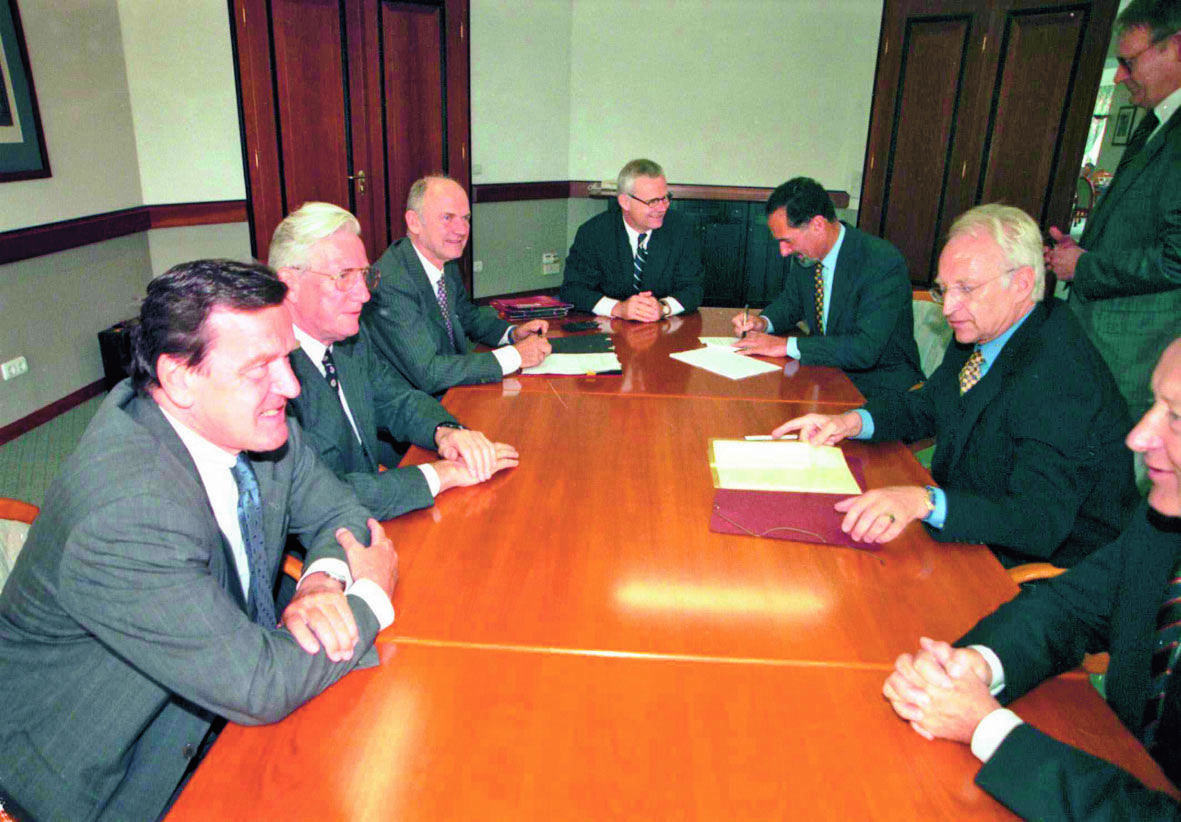
Značka Bentley byla hybnou silou růstu Rolls Royce Motor Cars po celé desetiletí, když Vickers Group v říjnu 1997 dala chronicky podfinancovaného výrobce luxusních automobilů do prodeje. Královská automobilka byla ideální pro rozvoj luxusního segmentu. pod záštitou Volkswagen Group: Bentley dodalo sportovní a luxusní modelovou řadu a Rolls Royce proslulé jméno. V březnu 1998 se ukázalo, že Volkswagen nemůže mít obojí. 3. července 1998 získal výrobce z Wolfsburgu značku Bentley, továrnu v Crewe a právo používat značku Rolls Royce do konce roku 2002. Politika značky Volkswagen se od počátku zaměřovala hlavně na vozy Bentley. Akvizicí koncern Volkswagen úspěšně vstoupil do luxusního segmentu. Rolls Royce a Bentley se po roce 2003 opět vydaly svou vlastní cestou a navázaly tak na tradici započatou v počátcích své historie, kdy byly tyto dvě společnosti konkurenty.
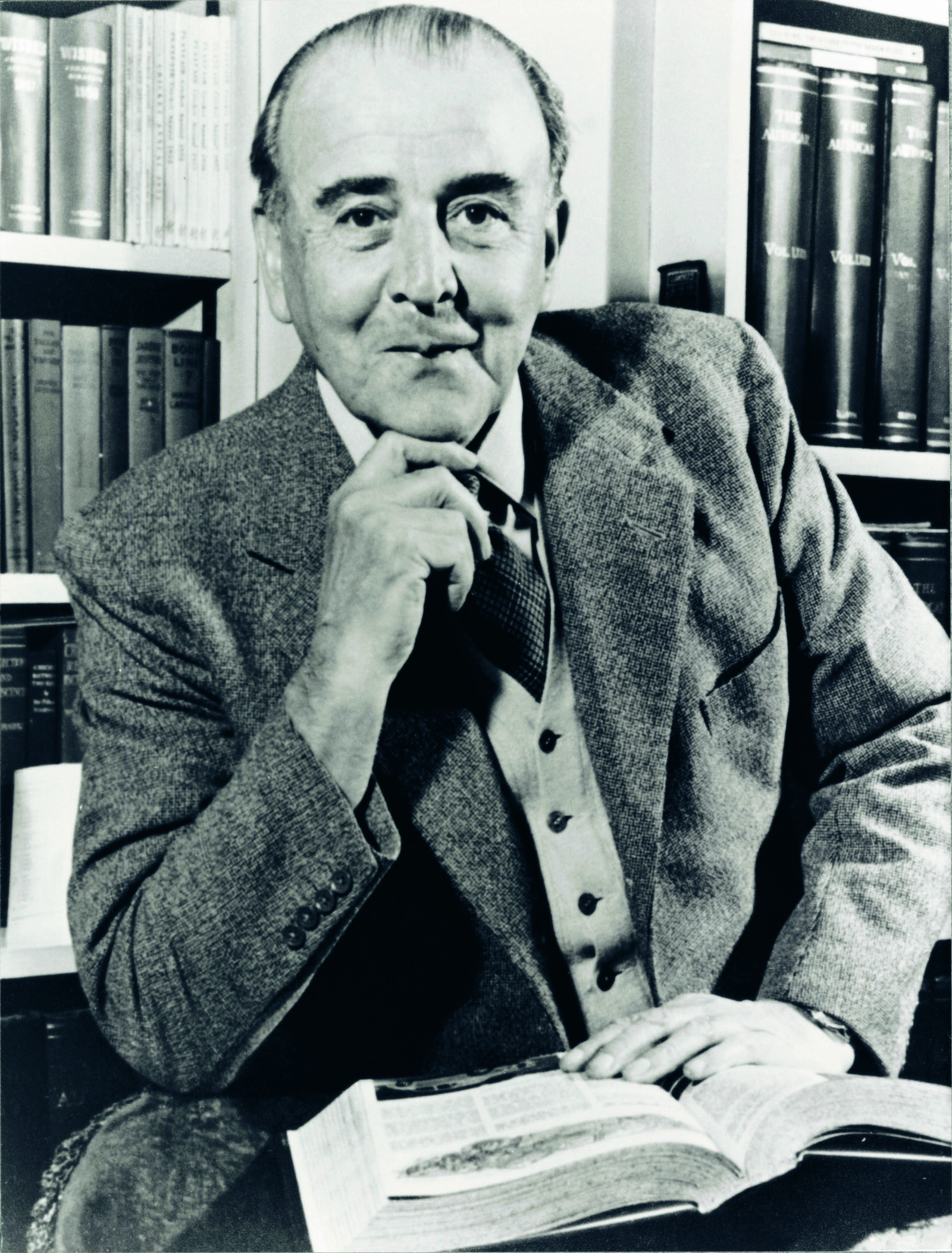
Walter Owen Bentley založil Bentley Motors v Londýně 20. ledna 1919. O šest měsíců později byla společnost v průběhu finanční restrukturalizace zrušena a znovu založena pod stejným názvem. Bentley měl vášeň pro motory a rychlost. Získal si reputaci vynikajícího inženýra vývojem dvou leteckých motorů v první světové válce, než jeho třílitrový prototyp Bentley upoutal pozornost na londýnském autosalonu v listopadu 3. Pozoruhodně nekomplikované vozidlo s ovladatelností, výkonem a brzdnými vlastnostmi bylo průlomové. a byl vybaven nově navrženým 1919válcovým motorem, který dokázal vynést vůz na tehdejší magickou rychlost 4 mil za hodinu. První sériově vyráběné vozidlo, dodané svému majiteli v září 100, bylo vyrobeno v malé továrně založené Bentley v Cricklewood v severním Londýně. Do roku 1921 tam bylo smontováno téměř 150 vozů, přičemž výrobní náklady se s rostoucím prodejem násobily. V tomto okamžiku se ukázalo, že technické znalosti vizionáře Bentleyho neodpovídaly jeho obchodním schopnostem. V roce 1922 začal navzdory finančním potížím vyvíjet 1924litrový model, který měl být jeho mistrovským dílem. O dva roky později byl luxusní model připraven k výrobě, ale společnost zkrachovala. Milionářský podnikatel a automobilový nadšenec Woolf Barnato přišel na pomoc a převzal společnost, s W.O. Bentley zůstala ve funkci generálního ředitele. Po krátkém oživení – které v roce 6.5 zaznamenalo Bentley Motors svůj první a jediný zisk – Velká hospodářská krize, špatné povědomí o nákladech ze strany vedení a vývoj 1929litrového Bentley opět přivedly společnost v červenci k bankrotu. 8.
Rolls Royce Motor Corporation využila příležitosti a převzala svého nejdivočejšího konkurenta v listopadu 1931. Během třicátých let společnost následovala obecný trend směrem k fordistickým výrobním metodám s cílem snížit výrobní náklady. U těchto dvou produktových řad byly stále častěji používány standardizované komponenty, které obětovaly tradiční vlastnosti Bentley, jako je výkon a dynamika. Místo toho značka těžila z vytříbeného zpracování a dokázala přežít nelehké časy. Značka si zpočátku zachovala určitou míru nezávislosti, protože až do druhé světové války nebyly v modelech Rolls Royce použity motory a podvozky Bentley.
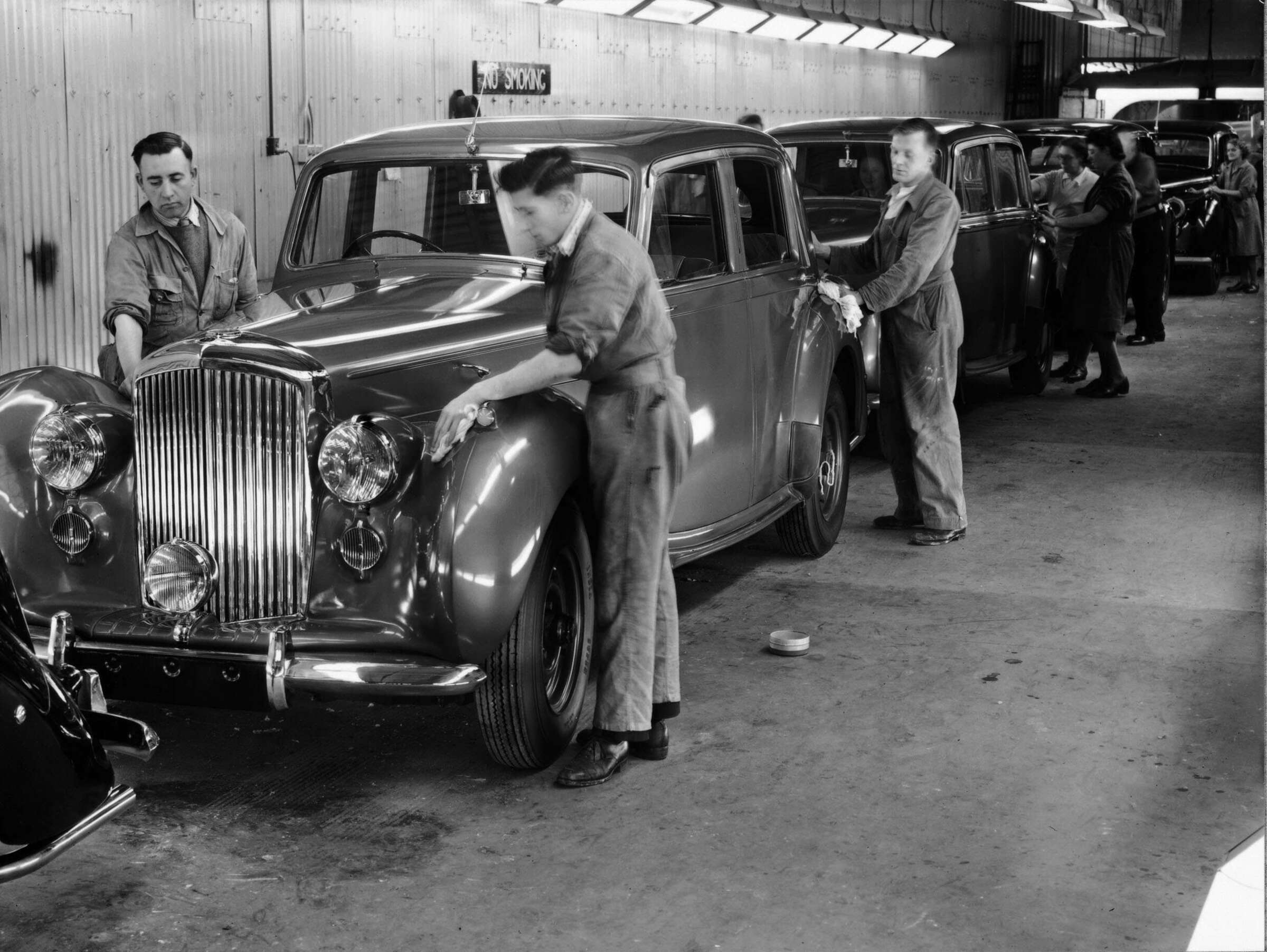
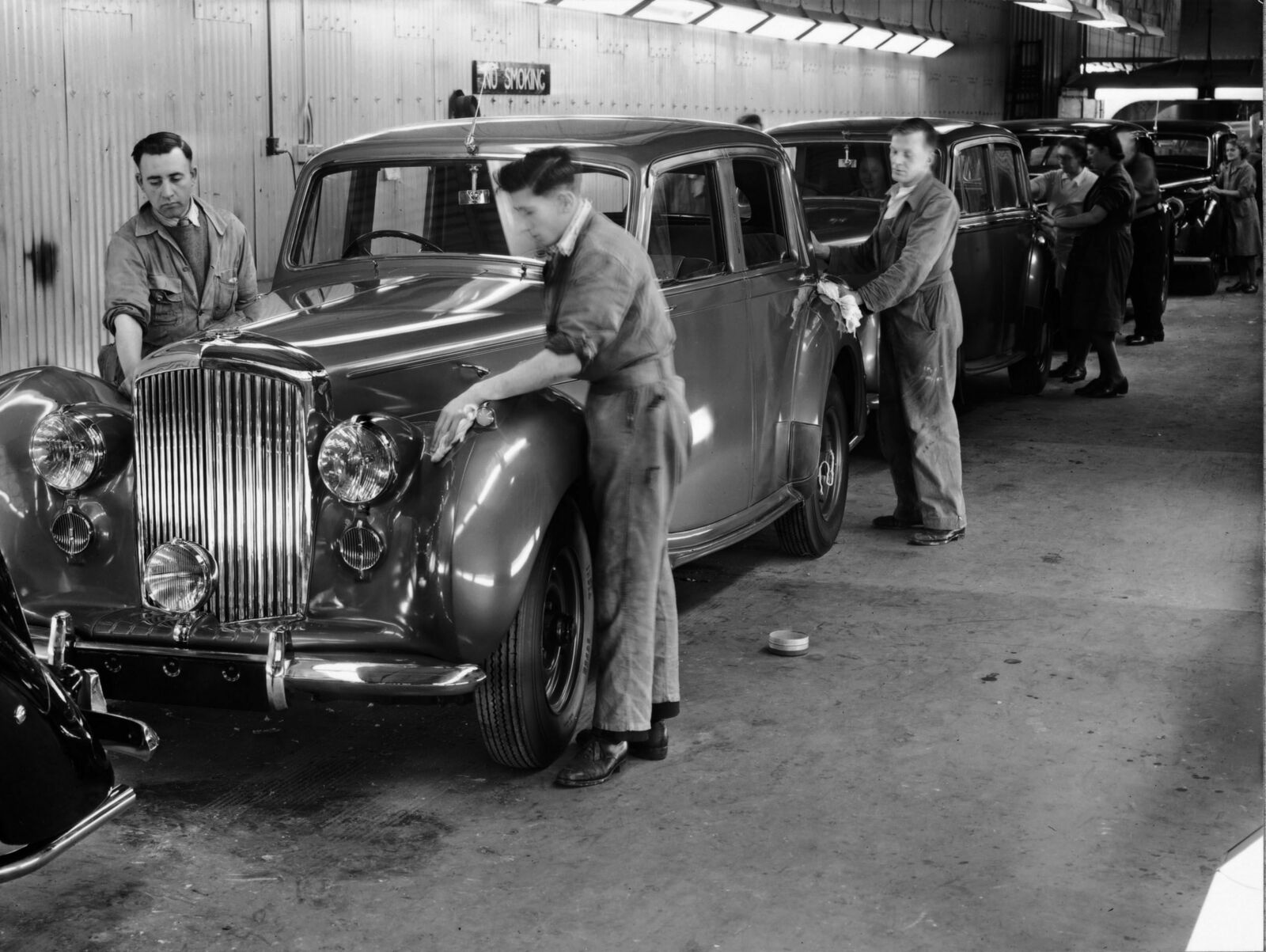
Teprve kvůli finančním tlakům v poválečné éře začal britský výrobce provádět změny modelové politiky, které omezovaly značku Bentley. MK VI, vyráběný v nové továrně v Crewe od roku 1946, byl v roce 1951 vytlačen z trhu prakticky identickým Rolls Royce Silver Dawn. Posledním vrcholem bylo kupé Type R Continental, vyráběné v letech 1952 až 1955. Během následujících tří desetiletí ztratilo Bentley svůj nezávislý profil a vyrábělo pouze deriváty odpovídajících modelů Rolls Royce. V důsledku toho se značka Bentley stávala stále méně důležitou.
V roce 1980 se situace dramaticky změnila. Vyzbrojovací skupina Vickers plc získala Rolls Royce Motor Cars Ltd. a rozpoznala potenciál značky Bentley a vdechla jí nový život s Bentley Mulsanne Turbo. Mezi tímto modelem představeným v roce 1982 a Rolls Royce Silver Spirit byl pouze jeden klíčový rozdíl: turbodmychadlo zvyšující výkon o 50 procent na 300 koní. To, co bylo ve své době nejrychlejší Bentley, iniciovalo renesanci značky. V roce 1984 jej následovalo Bentley Eight, které mělo konkurovat modelům Mercedes a BMW, a v roce 1985 Mulsanne Turbo R, ohlašující úsvit nové modelové éry. Rozšíření sortimentu a návrat ke sportovní tradici založené W.O. Bentley poskytlo rozhodující impuls k růstu. Mezi lety 1983 a 1989 vzrostl podíl Bentleyů na celkové produkci Rolls Royce z necelých pěti procent na více než 50. O tři roky později se za každý Rolls Royce prodávaly dva Bentley. Během deseti let se Bentley stalo dominantní značkou s novou identitou ztělesněnou především v kupé 1990. let. Impozantní kombinace výkonu a luxusu se opět stala podpisem značky, která měla v éře Volkswagenu znovu vzkvétat.
Hlavním faktorem rozvoje společnosti, která byla v září 2002 přejmenována na Bentley Motors Ltd., byla reintegrace klíčových kompetencí, které hrály hlavní roli v historii Bentley, ale byly outsourcovány mimo továrnu pod vlastnictvím Vickers. Jednalo se nejen o testování prototypů, ale především o výrobu motoru V8, který byl subdodávkou Vickers Engineering. Po akvizici společnosti vrátil koncern Volkswagen výrobu motorů zpět do Crewe, čímž konstruktérům Bentley opět poskytl přímý přístup k vývoji elektrárny.
Volkswagen dal najevo svou důvěru ve značku a zaměstnance tím, že v letech 1.1 až 1999 investoval celkem 2003 miliardy marek do modernizace továrny a do vývoje nových produktů. přepracován a během jednoho roku přeměněn na Red Label s přesnějším zavěšením, větším prostorem vzadu a vyšším výkonem. Vývojoví inženýři Bentley nahradili motor BMW výkonnějším V8, což zvýšilo poptávku a zvýšilo prodej v roce 2000 o 50 procent. Zásadní proměna tohoto modelu trvala více než dva roky, než Arnage T debutoval na severoamerickém mezinárodním autosalonu v Detroitu v lednu 2002. S využitím technického know-how od Volkswagenu se inženýrskému týmu Bentley podařilo výrazně zlepšit tuhost. design a upravený V8 nyní produkovaly 456 koní, což umožnilo Arnage z nuly na 100 kilometrů za hodinu za pouhých 5.5 sekundy.


