Wondering how fast you can drive in 4WD high? Wonder no more! Here’s everything you need to know about driving in 4WD High and low.
- Od Magnuse Selléna
- Aktualizováno: leden 7, 2023
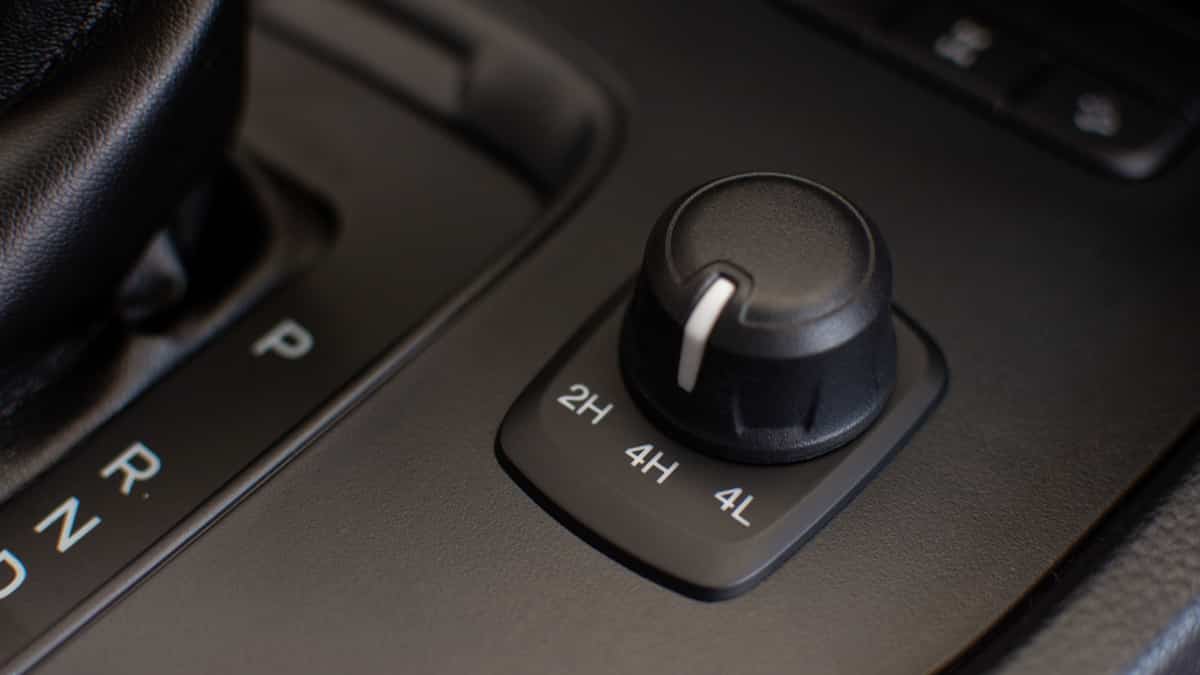
If you have a four-wheel-drive vehicle, you’ll want to know how to use it properly. There are questions that arise, such as how fast can you drive in 4×4 High, and what the difference is between this system compared with 4×4 Low.
Every auto manufacturer has different guidelines, but in general, you don’t want to drive faster than 55 mph when using 4WD High. 4WD is only engaged when in a low-traction situation and it wouldn’t be safe to go faster. Meanwhile, 4WD Low is meant to be used at ten mph or less in most cases.
I examine the differences between these systems and discuss what happens if you travel too fast. I also discuss a few of the basics surrounding the 4×4 High systems.
Difference Between 4×4 High vs. 4×4 Low
Your four-wheel-drive vehicle offers the choice between 4WD High and 4WD Low. How do you know which one is appropriate and when to use each option? The biggest difference to understand is the gearing between the two. With 4WD High, the vehicle uses direct gearing to power the wheels, whereas the 4WD Low system relies on gear reduction for more traction and power.
With the special gearing, the engine torque is multiplied easier, just like what’s done when you ride your bicycle up a hill. As you shift into a lower gear, more power is applied, allowing you to get up the hill with ease.
The lower speeds driven while in 4X4 Low make it easier to maintain the power required so your vehicle doesn’t stall. It also ensures that you keep the speeds to a minimum so you don’t hurt the vehicle when you are traveling across rough terrain or over bigger obstacles.
If you are comfortable driving ten mph in 4WD Low, you might prefer to speed up a little and switch to 4WD High instead. You can always switch back if you start to lose traction or you need to slow down.
Does 4×4 High Hurt the Vehicle?
When used properly, 4WD High isn’t going to hurt your vehicle. However, you can’t use four-wheel-drive for reasons other than what it’s intended for. You can switch to 4WD when the car starts to lose traction, such as when you hit dirt, mud, or snow.
With that said, if you are using the system while taking sharp turns, you could cause damage to the components. Energy can bind up inside the drivetrain, leading to costly repairs.
When the vehicle is in four-wheel-drive, the front and rear axles of the vehicle no longer spin differently when hitting a turn. The energy will be expelled with the spinning of the wheels, or it will bind up the transfer case, which is no good. If you notice the wheels are hopping in 4WD for no reason, this explains what is going on.
Should You Drive in 4×4 High All the Time?
You shouldn’t keep the vehicle in 4×4 High driving mode. With the build-up of energy occurring, you can cause drivetrain damage. There’s no reason to allow the excessive amount of wear, especially when the road conditions are just fine for normal travel.
There’s really no reason to drive in 4WD High all of the time. Once you hit speeds going more than 55 mph, it’s unlikely you are struggling with traction or controlling the vehicle.
Not only does four-wheel-drive cause more wear to the system, but it’s going to cause you to go through more fuel. There’s no reason to spend more than necessary on fuel or repairs, especially if you don’t need to be.
What about Full-Time 4WD?
By now, you have to wonder why a full-time 4×4 can drive at any speed without causing damage. If you have a Land Rover or 4×4 Toyota, the rules are slightly different. In these cars, there’s a center differential that will split the power between the two axles, just like the normal differential does.
With this center differential, power is sent to whichever axle has less grip, allowing there to be a difference in speed between the axles. When the center differential is in use, the 4×4 vehicles aren’t operating like the vehicle with regular 4WD High, so you don’t have to worry about the same type of damage occurring.
How 4WD High Affects the Vehicle
1. Brzdění
As you drive on the road with less traction in 4WD High, you are going to need more time to brake. The time it takes is going to naturally increase. For this reason, it’s best to adjust how far you follow vehicles in front of you to prepare for this additional time.
On a low traction surface, it might take you double the amount of time to stop. For this reason, it’s best to remain as far back as possible. If the car behind you is following you too closely, you might also prefer to have them go around you, just to be safe.
2. Manipulace
Not only will the stopping power be changed, but the way your vehicle handles will also be different. If you are driving across a low-traction road with 4WD High on, expect to notice some changes to the handling. Your steering system isn’t going to respond the same way it does when you are driving across a dry highway surface. In fact, you might notice an increase in understeering, but it can quickly swing the other way, leading to a loss of control.
To prevent an accident, it’s best to avoid any sudden moves that aren’t necessary. Continue to make small adjustments to the steering if needed, instead of large, jerky motions. You also want to be easy on the throttle when making these adjustments.
3. Zatáčení
You have to consider what happens when cornering. On the low traction surface, taking a turn is going to be completely different. It’s not going to be as smooth and comfortable as what you are usually accustomed to.
During the turn, your car can lose traction easily. If you aren’t keeping the vehicle under control, you could end up off of the road. That’s why you should slow down the speed if you feel uncomfortable. You also want to avoid any aggressive steering or quick braking unless it’s absolutely necessary.
Before the roads get bad and you need 4WD, practice how you would drive. Learn how to apply progressive braking and make smaller steering motions. You should also remain back from any other vehicles, especially when you are going through a turn.
Understanding when it is acceptable to drive fast in 4WD (4H), as well as the maximum speed you should drive in 4H, is of utmost importance to your safety as well as the mechanical preservation of your 4WD. So, how fast can you drive In 4H? This article will discuss the dangers of driving fast while in 4WD in certain conditions, the function of 4H and 4-LO, and how it affects the driving dynamics of a 4WD.
Driving over 55MPH in 4H on low-traction surfaces isn’t advisable. Similarly, 4WD-Lo should not exceed 10mph. If safe, switch to 4WD-High when driving faster than 10mph in 4WD-Lo.
So now that we know the maximum recommended speed to drive in 4WD is 55MPH in 4H and 4-low is 10mph, let’s now look at a few other factors, for example, what happens to the drivetrain of the 4WD when we engage 4H and when driving fast in 4WD is not always a good idea.
How Fast Can You Drive In 4H

To reiterate, when we engage 4WD (4H) we should always be on a low traction surface. This is very important to remember since there is always the risk of drivetrain “binding” if we don’t adhere to this rule. With that being said, a low-traction surface could be a dirt road, sand, grass, a muddy track, or a slippery snow highway. These are all perfect driving conditions for 4H. 55MPH in 4H and below is suitable under most of the above-mentioned conditions.
There will, however, be certain road surfaces and environments, such as wide dirt roads that we might feel comfortable driving more than 55mph. Always exercise caution since there are always factors that are outside our control that we need to be aware of.
Examples of hazardous conditions:
| Nebezpečné podmínky |
|---|
| Wild animals running in front of the vehicle |
| Praskla pneumatika |
| Sudden bends in the road |
| Nerovný povrch vozovky |
| Deep holes camouflaged by debris |
WATCH – How Fast Can You Drive in 4WD (VIDEO)

When we venture outdoors on our 4WD trips, we are still required to cover large distances on city highways before we reach the beginning of our adventure. If you are driving a part-time 4WD you will no doubt be in 2H mode on a tarmac or cement driving surface with good traction. This is essential to prevent drive-train binding.
When we reach the dirt roads and off-road mountain tracks we immediately engage 4H. Unless you have a permanent 4WD, then you simply proceed as normal since you already are in 4H all the time. Alternatively, if your vehicle is equipped with a mode modern 4WD system that has 4H-Auto then this would be a good time to engage 4A.
When your vehicle is in High-range 4H, the engine torque is sent to both the front and rear axles. The torque is, in turn, split 50/50 between each wheel on that axle, which means each wheel receives 25% of the engine’s total power. This makes the vehicle handle more stable and grip a lot better since more traction is gained by all 4 wheels propelling the vehicle forward. You gotta love 4WD.
Examples of low-traction surfaces include:
| Podmínky řízení | popisy |
|---|---|
| Slippery icy roads | Roads covered in ice or slick surfaces due to freezing temperatures or snowmelt. |
| Sněhové podmínky | Roads covered with snow, potentially reducing visibility and traction. |
| Sand tracks | Roads commonly found in rural areas are often unpaved and uneven. |
| Blátivé stopy | Roads are covered with snow, potentially reducing visibility and traction. |
| Farm roads | Tracks consisting of loose sand, are common in deserts or coastal areas. |
| Wet rocky surfaces | Roads covered with grass, are sometimes uneven and challenging to navigate. |
| Grassy surfaces | Tracks or trails with wet, soft soil, make the surface muddy and slippery. |
How Driving Fast in 4H Affects Braking

When driving on a slippery low traction surface, the braking distance on a vehicle is drastically increased. This means you need to seriously adjust your driving style to compensate for the extended stopping time. The stopping distance on a low traction surface can increase by as much as double (2x) that of regular braking distances, such as when driving on a tarmac surface.
The 3 key elements that make up the braking distance are the following:
So when driving on a low traction surface such as dirt, ice, or snow your reaction time combined with the stopping time is increased by ten. If that’s not a sobering fact, then I don’t know what is!
How Driving Fast in 4H Affects Cornering

When cornering on a low traction surface we need to consider the dynamic of the vehicle and the changes it undergoes in these conditions. Elements like cornering, braking, and acceleration are all negatively affected and we need to be aware of and prepared for that.
When cornering in 4WD on a slippery surface we want to avoid sudden braking and aggressive cornering. The vehicle can easily lose traction and veer off the road, resulting in an accident. Also, practice progressive braking where you gradually apply lighter pressure from further back to slow the vehicle down before the bend. Avoid braking in the bend is also a key factor since the weight will be shifted and traction is lost more easily.

The “Lo” on 4-Lo represents the low-range gearing that has been engaged. This means the ratios of the gearbox combined with the transfer case are extremely reduced and only designed to be used in extreme driving conditions.
Most off-road 4×4 vehicles have a 2H, 4H, and 4-Lo setting. When 4-Lo is engaged it means the 4WD power and torque are more readily available in the sense that, the revs will almost always be in the powerband. Stalling is virtually impossible and many modern 4WDs are equipped with anti-stall devices which allow you to almost stop in gear without clutch control on a manual 4WD.
When in 4-Lo mode the 4WD can more easily drive on challenging terrain without placing strain on the gearbox, clutch, and engine. Challenging terrain could be:
The function of 4-Lo is to provide maximum power and traction under very challenging driving conditions. This is only to be used when driving conditions do not allow you to drive over 10MPH. If you fear damaging your 4WD, rather engage 4WD and take it slow and steady. If you are doing any sort of rock crawling where you are required to negotiate each obstacle precisely and choose a driving line, will be an ideal time for 4-Lo. Driving through thick loose beach sand with a load will require 4-Lo to prevent damage to your vehicle’s clutch or to decrease the risk of overheating the gearbox if you are driving an automatic 4WD vehicle.
Závěrečné myšlenky
As a 4WD driver who drives challenging terrain, it’s always important to know when to engage 4H and 4Lo. Knowing how fast to drive in 4WD is essential to preventing serious damage to your truck, your wallet, and your ego. Do not attempt to drive over 55-60mph when in 4WD mode irrespective of the driving conditions. Remember, the vehicle dynamics are very different on low traction surfaces so adjust your driving style.
Pohony 4 kol a techniky jízdy v terénu jsou mou vášní již více než 20 let. Mým cílem je poskytovat co nejpřesnější, nejaktuálnější a užitečné informace o funkčnosti 4WD, běžných závadách a nejnovějších technologiích zabudovaných do většiny pohonů 4 kol.


