Nissan se sídlem v japonské Jokohamě je mezinárodní korporace poskytující vysoce kvalitní vozidla po celém světě pod značkami Nissan, Infiniti a Datsun. Jejich automobily, nákladní vozy a SUV jsou navrženy pro moderního jednotlivce nebo rodinu se zvláštním důrazem na nejnovější bezpečnostní a komfortní prvky.
Kde se ale Nissany vlastně vyrábějí? Možná vás překvapí, že více než polovina nových vozů Nissan zakoupených v USA je vyrobena přímo zde v Americe. Americké montážní závody poskytují zemi naše oblíbené modely Nissan a také podporují místní ekonomiky. Pojďme se dozvědět více o Nissanu a jeho výrobních závodech.
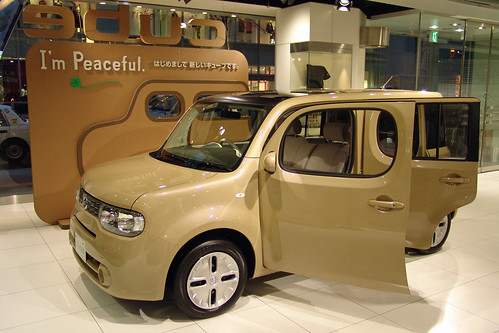
Historie Nissanu
Stejně jako mnoho prestižních automobilek má Nissan dlouhou a zajímavou historii. Kaishinsha Motor Car Works byla založena v roce 1911 zakladatelem Masujiro Hashimotem v Japonsku. Kaishinsha vyrobil svá první vozidla v roce 1914, ale až v roce 1935 byl otevřen její první montážní závod v Jokohamě. V tomto místě původního výrobního závodu je nyní sídlo společnosti. Toto místo si můžete prohlédnout a dozvědět se více o historii společnosti.
Ale odkud se vzalo jméno „Nissan“? V roce 1928 byla založena holdingová společnost Nihon-Sangyo, která nakonec vlastnila Kaishinsha Motor Car Works. Název Nissan je kombinací NIhon-SANgyo. Možná si vzpomínáte, že první vozy Nissan prodávané v USA byly označeny pod názvem Datsun. Titul Datsun je další kombinací důležitých jmen. „DAT“ je tvořeno počátečními písmeny příjmení investorů. Na auta, která vytvořili, se dívali jako na své syny, tedy Datson. Pravopis byl později upraven na Datsun.
Modely Nissan vyrobené v USA
Zatímco společnost Nissan prošla za posledních více než 100 let několika významnými změnami, od roku 1983 je stálá jejich oddanost americké ekonomice s montážními závody se sídlem v USA. Vše začalo v Tennessee a od té doby se rozrostlo na kombinovanou výrobu více než 1 milionu vozidel smontovaných v Americe každý rok.
Závod na montáž vozidel ve Smyrně
Montážní závod ve Smyrně v Tennessee byl jako první otevřen již v roce 1983. Od té doby sjelo z linky více než 10 milionů vozů Nissan. Zařízení o rozloze 6 milionů čtverečních stop zaměstnává přes 6,700 XNUMX pracovníků. Zatímco Nissan byl první, kdo zde otevřel výrobu, od té doby se v oblasti otevřelo několik dalších automobilových společností, což mělo významný dopad na místní ekonomiku. Pět modelů Nissan a jeden model Infiniti se montuje v montážním závodě Nissan ve Smyrně.
- Nissan LEAF
- Nissan maxima
- Nissan Murano
- Hledač Nissan
- Nezbedný Nissan
- Infiniti QX60
Závod na montáž vozidel v Kantonu
Montážní závod Nissanu v Kantonu ve státě Mississippi přímo nebo nepřímo přispěl k ekonomice státu vytvořením více než 25,000 2018 pracovních míst. Více než polovinu managementu tohoto závodu tvoří menšiny, což mu v roce 4.7 vyneslo označení společnosti Diversity, Inc. jako významné společnosti. Závod o rozloze XNUMX milionů čtverečních stop začal výrobou vozidel výhradně pro domácí trh a od té doby se rozrostl na vyrábí vozy Nissan i pro globální trh. Montuje se zde pět modelů, včetně obou nákladních vozů Nissan.
- nissan altima
- Nissan Murano
- Nissan N.V.
- Nissan Frontier
- Nissan Titan (a Titan XD)
Závod na montáž hnacího ústrojí
Nissan soustředí velkou část své výroby motorů do svého závodu na montáž pohonných jednotek v Decherdu, Tennessee. Tento závod o rozloze 1.4 milionu čtverečních stop, který je schopen vyrábět 1.1 milionu motorů ročně, byl otevřen v roce 1997. Kromě tradiční výroby motorů vyrábí závod na montáž pohonných jednotek také motory pro plně elektrický Nissan LEAF.
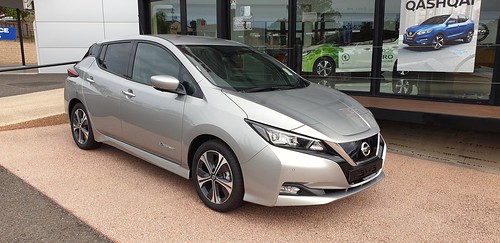
- 2.5-litrový, 4-válec (Altima, Rogue)
- 2.5-litrový, 4-válec SC (Pathfinder, Murano, QX60)
- 3.5-litrový, 6-válec (Frontier, NV, Patrol)
- 5.6-litrový, 8-válec (Titan, NV)
- eMotor (LEAF)
Japonské výrobní závody
Mnoho Nissanů se stále vyrábí v Japonsku. Vozidla vyrobená v Japonsku za účelem prodeje v USA jsou dovážena celními orgány a jsou k dispozici u vašich místních prodejců, i když jsou objednána na zakázku podle vašich specifikací. Několik montážních závodů v zemi vyrábí vozidla pro svůj vlastní domácí trh i pro mezinárodní prodej.
High-end 370Z a GT-R se vyrábí v továrně Tochigi v Kaminokawě, Tochigi. Tato vozidla vyžadují vysoce kvalifikované inženýry a techniky, aby vytvořili tato špičková sportovní auta. V Japonsku je také závod Shatai Kyushu v Yukuhashi, Fukoka, kde se montují crossovery SUV Rogue a Murano. V závodě Oppama v Yokosuka City, Kanagawa, se vyrábí další vozidla základní úrovně, jako jsou Versa a Cube, spolu se sportovním 350Z.
Výroba Nissan v Mexiku
Nissan má také dva montážní závody v Mexiku. Shromáždění Cuernavaca v Jiutepec se zaměřuje výhradně na NV200, kompaktní nákladní dodávku Nissan. Nissan Aguascalientes v Aguascalientes v Mexiku má více diverzifikovanou řadu s Sentra, a to jak Versa, tak Versa Note, NV a Micra. Micra, nazývaná také March, je supermini auto, které není dostupné v USA, ale prodává se ve velké části Asie, Kanady, Austrálie, Velké Británie a Mexika.
Partner roku Energy Star
V dubnu 2021 EPA jmenovala Nissan Partnerem roku Energy Star za kýženou cenu Sustained Excellence. Toto ocenění získali 10 let v řadě za své úsilí chránit naše životní prostředí prostřednictvím inovativních a efektivnějších zařízení. Snížením emisí skleníkových plynů a lepším řízením energie používané ve svých závodech je Nissan v čele energeticky účinné výroby. Nissan doufá, že prostřednictvím nové technologie dosáhne uhlíkové neutrality do roku 2050.
Váš nový Nissan: Kvalitní provedení
Bez ohledu na to, kde se váš nový vůz Nissan, nákladní automobil nebo SUV vyrábí, si u všech vozidel Nissan užijete vysoce kvalitní montáž, krásný design a promyšlenou pozornost k detailu. Navíc můžete být v klidu s vědomím, že váš nákup pomůže podpořit místní ekonomiky v Tennessee i Mississippi přímo zde v USA.
Kontaktujte Rydell Nissan ze společnosti Grand Forks
Náš přátelský a zkušený personál je vždy připraven poskytnout vám prohlídku našeho showroomu. Rádi bychom vám ukázali skutečně krásné řemeslné zpracování montážních závodů Nissanu v Americe, Japonsku a Mexiku. Rydell Nissan z Grand Forks se může pochlubit velkým inventářem vozidel Nissan. Kontaktujte nás, abychom si naplánovali zkušební jízdu a urychlili proces nastupování do vašeho nového nebo ojetého vozidla Rydell pomocí naší online žádosti o financování.
Lorem ipsum dolor sit amet, consectetur adipisicing elit, sed do eiusmod tempor incididunt ut labore et Dolore magna aliqua.
Ut enim ad minim veniam, quis nostrud exercitation ullamco laboris nisi ut aliquip ex ea commodo consequat. Duis aute irure dolor in reprehenderit in voluptate velit esse cillum dolore eu fugiat nulla pariatur. Kromě sint occaecat cupidatat non proident, sunt in culpa qui officia deserunt mollit anim id est laborum.

POSLÁNÍ
Welcome to NISSAN’s Monozukuri website.
On this website and through actual Plant tours we show
«what it takes to build cars.» Innovative design. Driving technology that excites.
Quality that assures peace of mind and safety.
Please come and see for yourself NISSAN’s Monozukuri technology
and the dedication of all the people involved with NISSAN.
We have started online plant tours for elementary schools
across the country from 2020.
We’re now on process of plant tours for adults. Please look forward to it.
NOVINKY
New information on PA (Plant Attendant) Blog sent by PA from each plants has added.
( IWAKI Plant, YOKOHAMA Plant )
[Informace]
“PA blogs” delivered from Plant Attendants of each plant are renewed at any time.
Please click these links below.
( IWAKI Plant, TOCHIGI Plant, YOKOHAMA Plant, OPPAMA Plant, KYUSHU Plant )
New Content: “Our Passion, Our Challenges” Discover the passion, challenges and stories of people who drives Nissan forward.
Klikněte zde pro více informací.
Added PA blog. Please click on next Plant name and have a look ( YOKOHAMA Plant).
Added PA blog. Please click on next plant name and have a look ( IWAKI Plant).
OBSAH VYZVEDNUTÍ
Our Passion, Our Challenges
Our Passion, Our Challenges
Discover the passion, challenges and stories of people who drives Nissan forward.
NISSAN VIRTUAL PLANT TOUR
NISSAN VIRTUAL PLANT TOUR
Nissan Virtual Plant Tour is now open!
Visit the Guest Hall of Oppama plant and enjoy the tour from anywhere and anytime you want!
NISSAN KIDS! Adventure
NISSAN KIDS! Adventure
We have assembled various materials to help kids understand NISSAN cars as well as what it takes to build a car. Don’t miss this chance to explore NISSAN together with original characters.
NISSAN Original Papercraft, time to dream
Why don’t you choose your favorite car and make it?
HOW TO ENJOY NISSAN PLANT
NISSAN PLANT TOUR
on THE WEB Have fun online
From your home, you can learn about the process of making a car and the features of a plant through Nissan’s website. There is a lot of useful content before and after the tour!
at THE FACTORY Go to a plant and have fun
We also offer tours for visitors, with limited numbers of people and as many safety measures as possible (some plants do not offer this service).
CAR MANUFACTURING PROCESS
How a car is manufactured
Enormous iron plates are cut into various sizes. Pressure is applied above and below using a big pressing machine, which molds large components such as the doors and side panels that build a car.
- How many cars can you build with one steel roll (approx. 300m) ? We can build approximately 300 cars.
- Why are car components processed by stamping in the first place? Processing time is short (about 3 seconds for one component), and also is a method that is suitable for making components that have the elegance and high-precision required of a car.
- What happens to the leftover steel plate? Steel plate that has been cut out is all re-used to prevent waste.
Body Assembly (Welding)
The parts formed in the stamping process are joined together by melting iron at high temperatures to form the shape of a car. Computer-controlled robots perform spot welding, arc welding, laser welding, and other tasks with high precision, which are then carefully checked at the end by the workers’ eyes.
- Why is the frame in this process referred to as «white body?» We call it a «white body» because it is the basic structure of a car at the framework stage, and is in a pristine state before it is painted.
- Which components are assembled? There are 4 main categories. The floor of a car is referred to as «floor», the walls are «body side», the roof is «roof», and «cover parts» are the doors.
- The heat generation method used for spot welding is a familiar heat source in the home, but what is it used for? It is used in electric rice cookers and irons.
Painting takes place in a dust-free environment. Using the latest in paint application technology, the body and bumpers can be painted at the same time, despite being made of different materials. This results in an even, beautiful finish.
- How does the robot prepare for different colored cars on the line? The robot’s paint equipment is thoroughly cleaned with paint thinner before painting the next car.
- How do you apply two-tone colors? The robot will paint the main color in the order set in the computer beforehand. After drying, it returns to the line and paints another color.
- Why are there air showers in the painting area? This is to ensure that the painting is completed without any dust. Workers use air showers to remove dust before entering the site.
Engines and motors are made of iron and aluminum. They undergo forging, casting, and other processes, and the parts that operate are subjected to precision machining.
- Where does the word engine come from? It derives from Latin, and means «Innate ability» or «genius».
- Why is the engine at the front end? The engine gets very hot and needs to be cooled well by the outside air, and also since it is heavy, the overall balance of the car needs to be maintained.
- What is the difference between horsepower and torque? Torque is the force acting on the engine’s rotating shaft to turn it. Horsepower is how fast you can go or how heavy a load you can carry by maintaining that power.
About 3,000 parts bursting with technology are attached to the body after painting has been completed. Meanwhile, automation and the sharing of roles with work robots reduce the burden on workers, realizing a human-friendly work environment.
- How are various improvements made to the production line? Workers propose improvement measures amongst themselves and also hold company contests, endeavoring to bring more speed and precision to processes, however minor.
- Are Electric Vehicles manufactured in a designated area? They are manufactured on the same line as Gasoline and e-Power.
- Do you need a special qualification to work in the assembly area? There are qualifications for handling hazardous materials and low-voltage electricity qualifications for producing EVs.
Completed cars are thoroughly checked by qualified personnel for about 700 to 1,200 items. The cars are actually driven at a speed of 100km/h to strictly check the operation of the accelerator pedal and brakes for any defects.
- What happens to cars that do not pass the inspection? Any defects found are thoroughly fixed and re-inspected before returning to the line.
- Where are the driving inspections held? The test which involves driving on a roller is held in the factory, while the test that involves driving on a test course is conducted on a site within the plant premises.
- Are inspections held at this phase only? Inspections are also carried out for each process individually. Due to thorough inspections during each process, there are very few defects in the final inspection.
After passing strict inspections, cars are delivered to customers around the world by land transportation using dedicated trucks and sea transportation using dedicated ships.
- How many days are the cars transported by ships? Cars are transported by ship for approx. 1 day for domestic shipping, up to one week for neighboring countries, and up to one month for faraway countries.
- What sort of construction is the dedicated ship for transporting cars? The interior is made up of several layers in order to load as many cars as possible at once.
- At what point are the car numbers created? When shipped, they are transported from a special wharf on the premises without numbers, and numbers are attached after arriving at the sales company.
- Lisování
- Sestava těla
- Malba
- Engine/Monitor Manufacture
- Montáž
- Inspekce
- Přeprava
Check out this Nissan’s car budilig process video about what builds a car
Domácí
výrobní základny
Globální
výrobní základny
SIX PLANTS
Domestic production bases
6 domestic plants at the crux of NISSAN car manufacturing.
Each plant plays a role and strives for the highest quality.
Iwaki Plant
Iwaki City, Fukushima
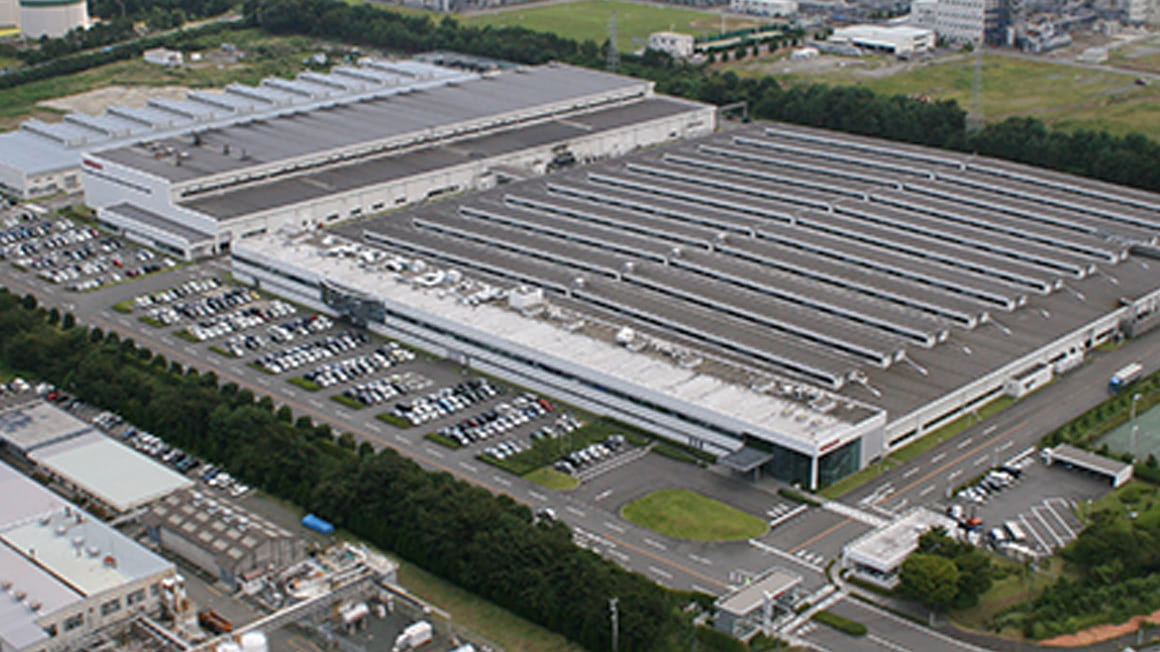
Rostlina Tochigi
Kawachigun Kaminokawamachi, Tochigi
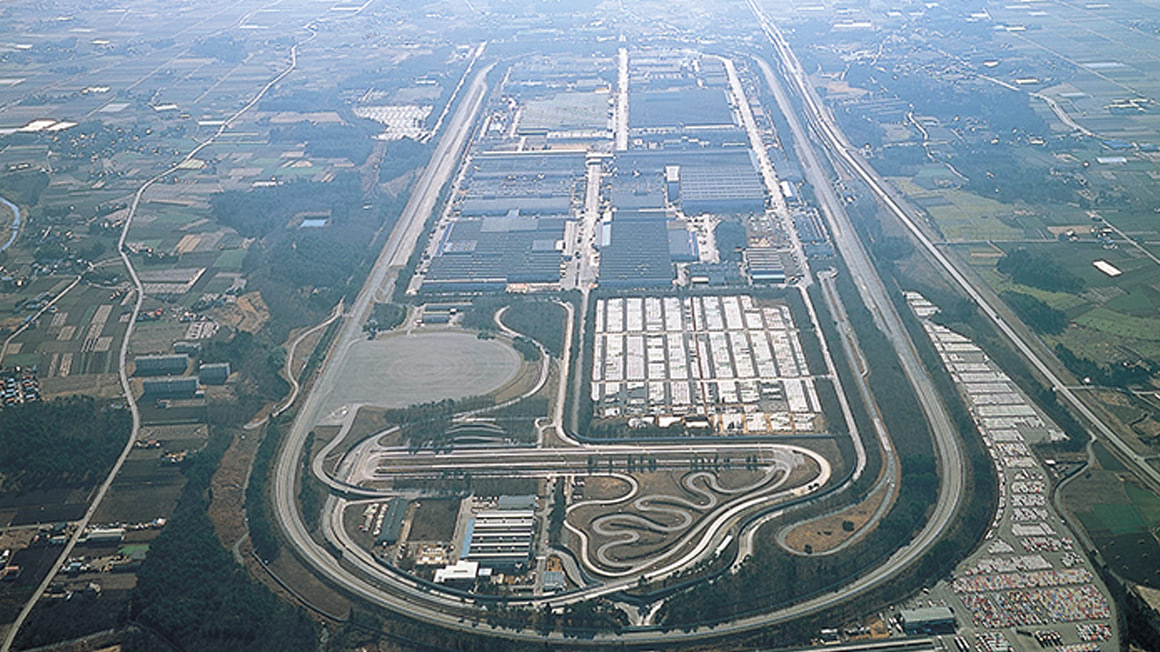
Yokohama Plant (Engines, Motors)
Yokohama City, Kanagawa
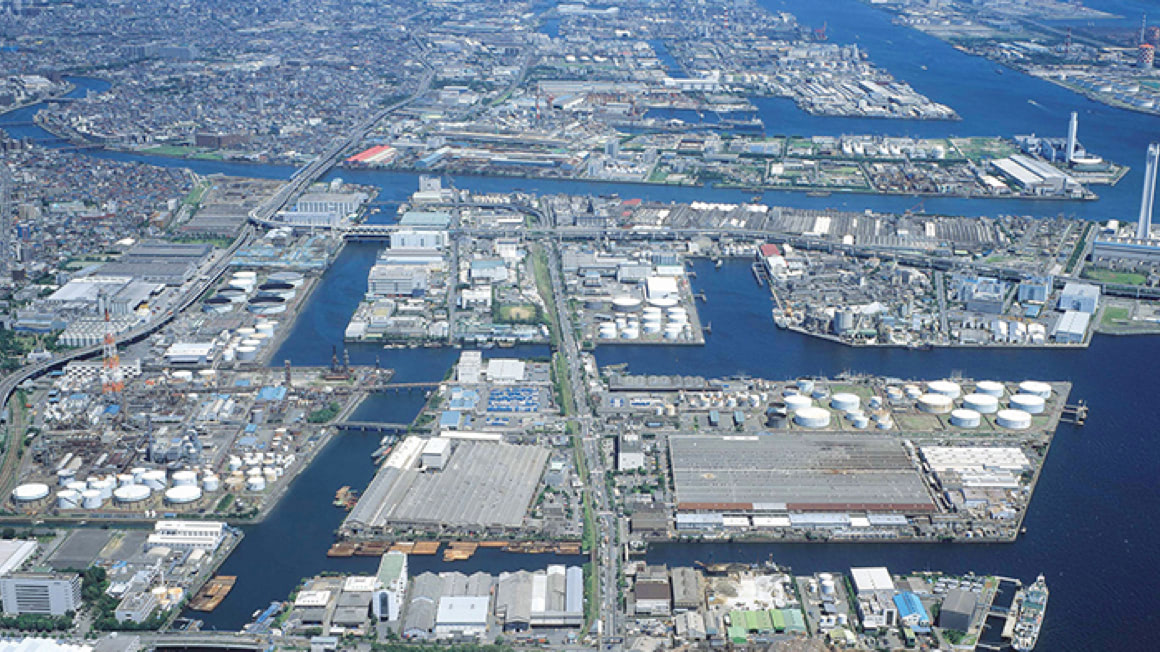
Závod Oppama
Yokosuka City, Kanagawa
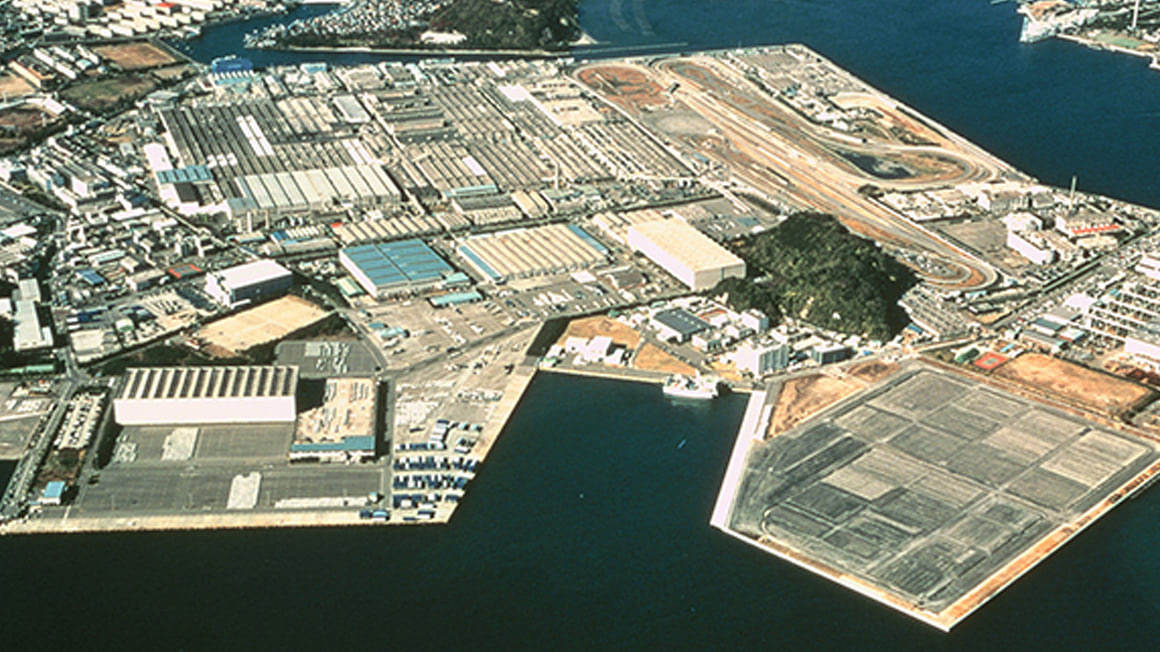
Nissan Shatai Co., Ltd. Shonan Plant
Hiratsuka City, Kanagawa
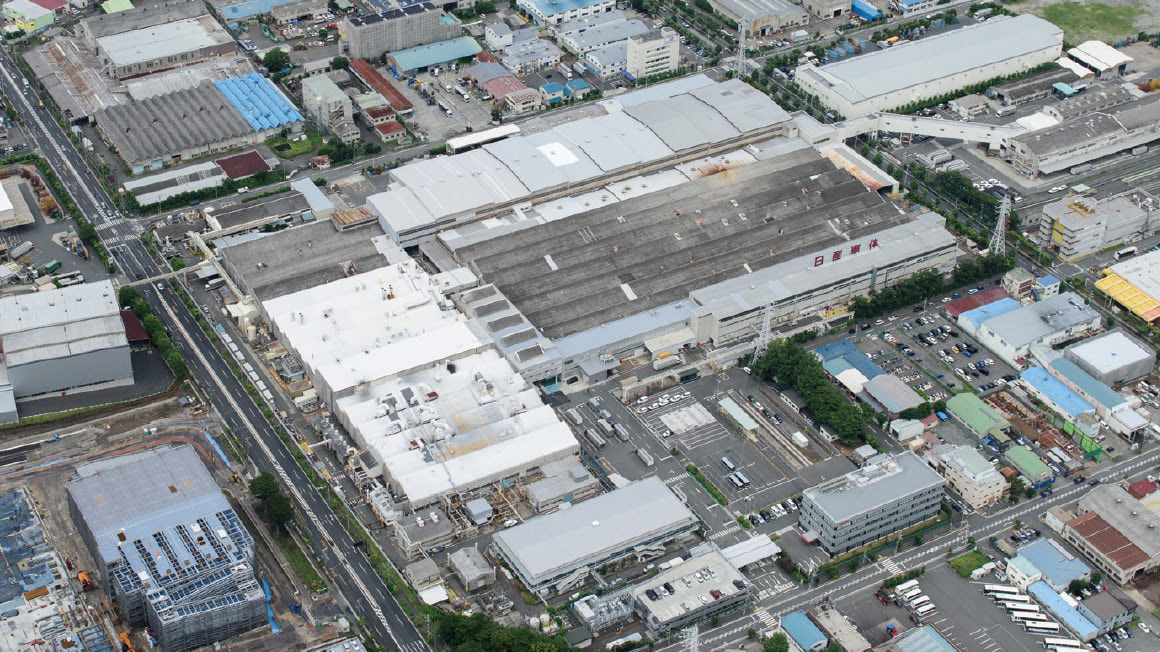
Nissan Motor Kyushu Co., Ltd
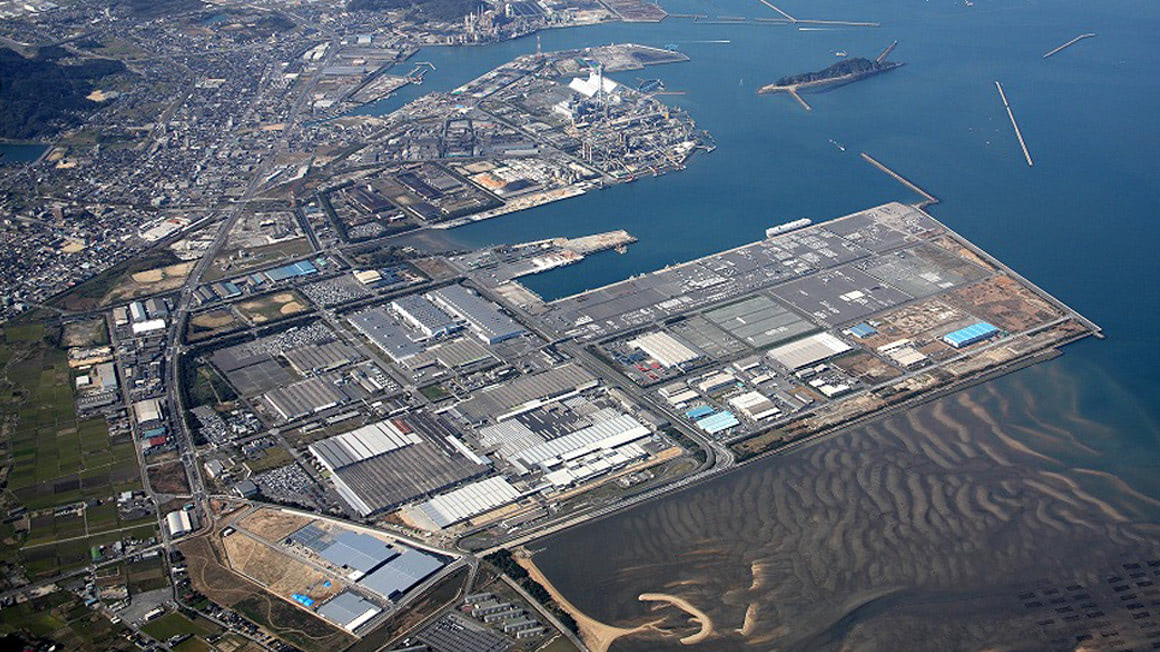
NISSAN Motor Kyushu started production in 1975 as the first automobile plant in Kyushu. The momentous first car to be produced in Kyushu was the Datsun truck. Today, we deliver the cars we produce to customers all over the world, and we produce the largest number of cars of any NISSAN plant in Japan.
SIXTEEN PLANTS
Global production bases
By efficiently producing vehicles at plants that are rooted in local communities we produce quality products that satisfy our customers.
| [Severní Amerika] | ①U.S ②Mexico |
|---|---|
| [Evropa] | ③UK ④Spain ⑤France |
| [Asie] | ⑥China ⑦Taiwan ⑧Thailand ⑨Philippines ⑩Indonesia ⑪India |
| [Other regions] | ⑫Brazil ⑬Argentina ⑭Egypt ⑮South Africa |
RELATED FACILITIES
Introducing Related Facilities
The NISSAN Global Headquarters Gallery
(Yokohama City, Kanagawa)
In addition to presentations by the gallery staff conveying the appeal of the cars on display, the gallery also conveys seasonal messages that NISSAN is focused on realizing, such as the mobility society. Don’t miss the presentation using a big screen and lighting equipment.
NISSAN CROSSING
(Chuo Ward, Tokyo)
NISSAN CROSSING is the transmission point for Nissan Intelligent Mobility, providing customers with an «exciting driving experience of the future.» Ginza is a place where tradition and innovation intertwine to create new cultures. Please don’t miss NISSAN CROSSING, a new landmark in this district.
NISSAN Heritage Collection
(Zama City, Kanagawa)
In the Heritage Collection, a number of «commemorative cars» — including those that evolved into today’s cars and those that were epoch-making in history — are carefully preserved as valuable assets that tell the story of NISSAN’s history.
NISSAN Engine Museum
(Yokohama City, Kanagawa)
The 28 engines that have played an key role in the history of Nissan’s engine development are introduced in six groups, including the Type 7 engine manufactured in 1935 when the Yokohama Plant was founded, as well as other engines from previous generations and engines that have been used in racing.
Nissan Motorsports & Customizing Co., Ltd.
NISMO SHOWROOM
(Yokohama City, Kanagawa)
As a hub for the NISMO brand, we display old and new NISSAN/NISMO race cars, NISMO road cars, as well as various trophies and driver helmets, allowing you to experience the history of NISMO.


