
In 1993 Chrysler stunned the automotive world with its LH sedans, the Chrysler Concorde, Dodge Intrepid, and Eagle Vision. They were built around the auto maker’s new cab forward concept. The result was a family of sedans that were both sleek and striking, yet offered more interior room than even some large luxury sedans. Well, after five years, even a concept as exciting as cab forward can lose a little of its marketplace zing. So for 1998 Chrysler is updating its big sedans in a very big way.
If the attention that our Chrysler Concorde LXi attracted is anything to go on, it already is!
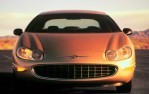
Bearing a strong resemblance to the 1996 LHX technology demonstrator, Chrysler’s newest big car design is the closest thing to a real concept car to ever hit American showrooms.
The lines are even smoother than before, quite an achievement on a car built for mass production, and emphasize the ‘98 Concorde’s almost 8-inch increase in overall length. And while the stunning front end is a rather blatant copy of designs by both Ferrari and Aston Martin, it’s everyone’s favorite feature. The styling is less distinctive as you move to the rear, but it’s still handsome. Our only real gripe is that retaining so much of the show car’s expansive lines makes the real-world-size, optional 16-inch alloy wheels look too small.
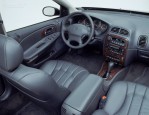
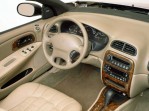
A complaint that you’ll never hear about the cavernous interior. Many of the cabin’s dimensions have been marginally reduced for ‘98, but brilliant packaging means that the feel is of more, not less. The dash is elegant in its simplicity. While faux wood trim on the doors and center console adds a touch of uptown appeal.
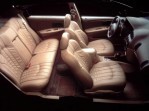
Our LXi test car came with the optional 50/50 split bench seat up front. Leather is standard, and comfort levels high. Eight-way power adjustments are standard. Also standard with this seat is a fold-down arm rest with storage space and folding cupholders. As is a wide-range tilt wheel, which allows an excellent view of the large, clear analog gauge cluster.
Automatic climate controls are standard on the LXi, and feature big, stylish switches. So does the standard AM/FM cassette stereo. Though we would swap its low dash position with that of the climate controls.
As with last year’s Concorde, rear seat room is overly generous. But rear leg room has actually increased by almost 3 inches, making it bigger than those of the Lincoln Continental or S-Class Benz. A cargo pass-through is concealed behind the arm rest, allowing you to carry objects too long for the already huge trunk. 18.7 cubic feet is its new volume, up 2.1 from that of the ‘97 model.
Increases are also the order of the day under the hood, where new all-aluminum 24-valve V6 engines replaced last year’s pushrod designs. Top of the line is the LXi’s 3.2-liter single-cam unit which makes 225 horsepower, and 225 pound/feet of torque. That’s 11 horses more, out of less displacement than the iron-block 3.5-liter on which it is based. LXi-grade Concordes will get an all-new 2.7-liter twin-cam V6 that makes 200 horsepower, and 190 pound/feet of torque. A full 25% more than its predecessor.
Both engines feed power to the front wheels through an electronically controlled 4-speed automatic transmission. Which, when mated to the larger 3.2, launched our 3,531 pound LXi to 60 in 8.5 seconds. The quarter-mile ran out in 16.4 seconds, at 87 miles per hour.
Both engine and transmission were as smooth as the styling. And while the V6 does work to move this much car, power was certainly adequate for most daily driving. As was economy. EPA ratings are 19 city and 28 highway. We managed 24 overall.
Concorde handling is marked by prominent front plow thanks to its forward weight bias, but with excellent stability from the long 113-inch wheelbase. Our drivers easily out-ran the power steering pump during the handling test, but most liked the response of the multi-link independent suspension. And while no one would call a car that’s over 17-feet long nimble, the new Concorde impressed us with its more solid feel. Much of which can be attributed to a new stiffer platform, with 40% more torsional rigidity than its predecessor.
We were less impressed with the car’s prominent tire noise over rough roads—it positively booms through the rear seat — the price of building such a large cabin—and the engine’s lack of real top end punch when passing on the highway.
But positively loved the well-controlled ride. Braking is by new anti-lock-equipped, 4-wheel discs. They brought the big Concorde down from 60 in an average of 131 feet with less pedal pulse than before.
And while new car prices normally go up, the ‘98 Concorde’s price will rise a little more than one percent. Expect base price for an LX-grade car to be about $21,000. While about $25,000 will be the starting price for an LXi like our test car.
And it’s Chrysler’s flat pricing strategy that leads our list of hits. And that’s very closely followed by the superb styling, super-smooth drivetrains, roomy well-laid-out interior, and solid chassis. Misses were prominent road noise in the rear cabin, a slow power steering pump, and a lack of top end passing power.
Despite these hiccups, the new Concorde is a big improvement over the innovative, but sometimes crude, original.
Autoweek magazine concurred, saying that, “Certainly the engineers have taken to heart the criticism that the originals were underdeveloped, paying more attention to details….” And while Automobile Magazine noted that: “Chrysler has made significant refinements to the underpinnings…” They also said: “These are very nice cars, but they are not aimed at serious drivers…”
But as near-luxury family cars, they may be hard to beat. With even more innovative styling, huge improvements in build quality, and more room per dollar than anything short of a minivan, they’re a bigger threat to both foreign and domestic competitors than ever before. And continue to make Chrysler, once known for the most boring sedans on the road, now one of the most admired family car names in the land.
Specifikace
- Motor: 3.2 Liter, 24-valve, V-6
- Výkon: 225
- Točivý moment: 225 lb stop
- 0-60 MPH: 8.5 sekund
- 1/4 míle: 16.4 sekund při 87 MPH
- 60-0 MPH: 131 Feet
- Počet najetých kilometrů EPA: 19 MPG City 28 MPG Highway
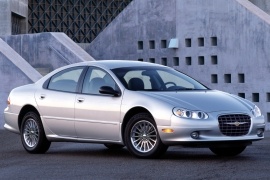
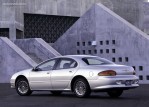
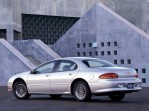
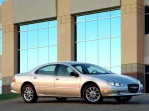
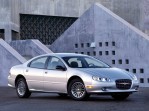
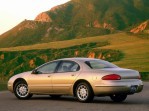
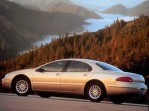
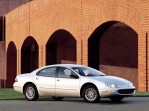
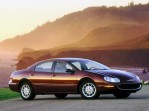
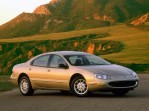
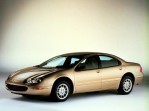

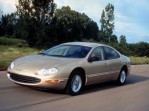
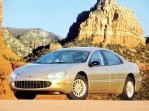
Facing many critics for the first generation of the Concorde, Chrysler introduced the second generation in 1998, dismissing its predecessor after only five years since it was launched.
Its predecessor lacked in the lights department, rear window defroster, and a few other areas that made it a slow-seller. With the second generation, the Concorde finally hit the spot. Even if it was longer than its predecessor, it was lighter due to the extensive use of aluminum for the rear suspension and hood. It shared only the door panels with its smaller brother built on the same platform, the Chrysler 300.
At the front, the 1998 Concorde distinguished itself due to the unusual-looking kidney headlights. The quad beam lights were far better than on the 1993 Concorde. Its cab-forward design with a very raked windshield created a dynamic image amplified by the ascending beltline. At the back, a set of elliptic, corner-mounted taillights matched the bio-design era, which was about to end, but it reached the car’s target customers.
Inside, the Concorde offered plenty of room for five occupants with more than adequate legroom for the back-seat passengers, thanks to a small center tunnel. At the front, the carmaker installed a rounded-shaped dashboard with five vents on it. The instrument panel was the home of four dials with silver rings around them. On the center stack, the carmaker installed the audio and climate controls into a wood trim. Since the carmaker made the Concorde a mid-size sedan for long journeys, it created a 530 liters (18.7 cu-ft) trunk space.
Under the hood, the 1998 model featured two new engines: an all-aluminum 2.7-liter V-6 and a 3.2-liter V-6. Later on, Chrysler added a re-worked 3.5-liter V-6 from Concorde’s bigger brother, the LHS.


